Turkey is not just a destination — it is a culinary civilization. Sitting at the crossroads of Europe, Asia, and the Middle East, Turkish cuisine draws from Central Asian nomadic traditions, Ottoman palace kitchens, Mediterranean harvests, and Black Sea mountain culture. The result is one of the most diverse and deeply satisfying food cultures on the planet. Whether you are tearing into a crispy simit on an Istanbul ferry at sunrise or sharing a table of meze with new friends over raki at midnight, eating in Turkey is never just about the food — it is about connection, ritual, and centuries of refinement.
This guide is written for travelers planning a trip to Turkey in 2026. We cover what to eat, where to find the best versions, how much things cost, and the regional specialties that most tourists miss. Whether you are spending a weekend in Istanbul, road-tripping the Aegean coast, or joining a guided food tour, this is the only food guide you need.
1. Turkish Breakfast (Kahvalti)
If there is one meal that defines Turkish food culture, it is kahvalti — breakfast. The word itself comes from kahve alti, meaning "before coffee," but Turkish breakfast is far more than a prelude. It is a sprawling, social, endlessly refillable event that can easily last two hours on a weekend morning. Once you experience a proper Turkish breakfast, cereal and toast will never feel the same.
Serpme Kahvalti (Spread Breakfast)
The crown jewel of Turkish breakfast is serpme kahvalti — literally "spread breakfast." The table is covered edge-to-edge with dozens of small plates: multiple cheeses (beyaz peynir, kasar, tulum, lor), olives (green and black, sometimes five varieties), tomatoes, cucumbers, fresh herbs (parsley, dill, mint), honey with kaymak (clotted cream), jams (sour cherry, rose, fig, quince), butter, sucuk (cured spiced sausage), pastirma (air-dried cured beef), borek (layered pastry with cheese or meat), and always a basket of fresh bread. Eggs come on the side — fried, scrambled, or cooked as menemen.
In Istanbul, the best serpme breakfast spots are in Besiktas (Van Kahvalti Evi), Karakoy (Namlı Gurme), and along the Bosphorus in Kuzguncuk and Rumeli Hisari. Expect to pay 250-500 TL per person at a mid-range spot in 2026, though neighborhood kahvalticis can be much cheaper.
Pro tip: Never order a full serpme breakfast for one person — it is designed for sharing. Two people can comfortably share a single spread at most places. Tell the waiter "iki kisilik" (for two people) to avoid over-ordering.
Menemen
Menemen is Turkey's answer to shakshuka, though Turks will (rightly) insist it came first. Scrambled eggs cooked slowly with tomatoes, green peppers, and a touch of red pepper flakes, served in a small copper pan still bubbling from the stove. The key is that the eggs should be soft and barely set — not dry. Some versions add sucuk or kasar cheese on top. Scoop it up with fresh bread and you have one of the most satisfying simple meals on earth.
Sucuklu Yumurta
Sucuklu yumurta (eggs with sucuk) is the other breakfast classic. Sliced sucuk — a dry, spiced beef sausage seasoned with garlic, cumin, and red pepper — is fried in its own fat until the edges crisp, then eggs are cracked directly on top. The fat from the sucuk flavors the eggs. It is simple, rich, and absolutely addictive. Every neighborhood restaurant serves it, and it costs almost nothing — usually 80-120 TL.
Van Breakfast
The city of Van in eastern Turkey has elevated breakfast to an art form. A Van breakfast includes everything in a standard serpme spread, plus regional specialties: otlu peynir (herbed cheese made with wild mountain herbs), murtunga (eggs scrambled with flour and butter), kavut (roasted wheat flour with butter), and local honeys from highland flowers. Several Van breakfast houses have opened in Istanbul — Van Kahvalti Evi in Cihangir is legendary and always packed on weekends. Arrive before 9am or expect a wait.
Other Breakfast Staples
Simit is the ring-shaped sesame bread that you will see everywhere — sold from red carts on every corner, eaten on the ferry, paired with tea. A simit with a slice of beyaz peynir (white cheese) and a glass of cay is the quintessential on-the-go Turkish breakfast for about 30-40 TL total.
Borek comes in many forms: su boregi (layered with cheese, boiled then baked), sigara boregi (fried cigar-shaped rolls with feta), and tepsi boregi (tray-baked with minced meat or spinach). Borek shops (borekci) open early and are a reliable breakfast option in any neighborhood.
Acma and pogaca — soft, slightly sweet bread rolls — are another grab-and-go option, often filled with cheese, olive, or potato. You will find them at every bakery alongside fresh-baked pide bread.
2. Street Food You Must Try
Turkish street food is not an afterthought — it is a culinary category of its own, with dedicated shops, fierce regional pride, and flavors that rival any sit-down restaurant. Here are the essentials, ranked roughly in the order you should try them.
Balik Ekmek (Fish Sandwich)
Grilled mackerel tucked into half a loaf of bread with onions, lettuce, and a squeeze of lemon. The most famous version is sold from bobbing boats at Eminonu on the Golden Horn in Istanbul, though locals argue that the ones from the Karakoy side are better and cheaper. The bread should be fresh, the fish should be smoky, and you should eat it standing by the water. Cost: 150-250 TL.
Kokorec
Kokorec is chopped lamb intestines seasoned with cumin, oregano, and red pepper flakes, wrapped around a skewer and slow-roasted over charcoal, then chopped on a flat surface and stuffed into half a bread loaf. It sounds challenging, but the flavor is extraordinary — crispy, savory, slightly spicy, and deeply satisfying. This is Turkey's ultimate late-night food. The best kokorec stands have lines at 2am. Look for ones where the kokorec is visibly turning over real charcoal, not gas. Cost: 100-140 TL for a half-portion (yarim ekmek).
Pro tip: Order "yarim ekmek, baharatlı" (half bread, spicy) for the ideal first-timer portion. If you like it, go back for a full.
Midye Dolma (Stuffed Mussels)
Midye dolma — mussels stuffed with spiced rice, pine nuts, and currants — are sold by street vendors carrying large trays, especially along Istiklal Caddesi and the Kadikoy waterfront in Istanbul. The vendor opens each mussel, you squeeze lemon over it, and scoop the filling directly into your mouth from the shell. They are sold by the piece: start with 5-6 and see where it goes. Typically 15-25 TL per piece. Choose vendors whose mussels look plump and freshly prepared, not dry.
Kumpir (Loaded Baked Potato)
Ortakoy, on the Bosphorus waterfront near the iconic mosque, is the spiritual home of kumpir. A massive baked potato is split open, the flesh is mashed with butter and kasar cheese, then you choose from 20+ toppings: corn, olives, pickles, sausage, Russian salad, coleslaw, mushrooms, and more. It is an absolute mountain of food. One kumpir is a full meal. Cost: 120-200 TL depending on toppings. Ortakoy is touristy, but it is genuinely where this dish lives.
Doner
You know doner. But you do not know Turkish doner until you have had it in Turkey. Forget the greasy European kebab shop version. In Turkey, doner is thinly sliced lamb (or beef, or chicken) shaved from a vertical rotisserie, served either in bread (ekmek arasi), wrapped in lavash (durум), or plated over rice with grilled tomatoes and peppers. The meat should be well-seasoned, slightly crispy on the edges, and carved to order — never sitting in a warming tray.
For the best doner in Istanbul, Bayramoglu Doner in Kadikoy and Doyuran Doner near the Grand Bazaar are reliable picks. In Ankara, doner is practically the city's identity — try Haci Arif Bey or Uludag Kebapci.
Lahmacun
Lahmacun is a paper-thin crispy flatbread topped with seasoned minced meat, onions, tomatoes, and parsley, baked in a wood-fired oven in about 90 seconds. It arrives at your table sizzling. Squeeze lemon over it, add parsley and a few slices of raw onion, roll it up, and eat it like a wrap. Lahmacun is not a pizza — it is thinner, crispier, and lighter. Two lahmacuns with an ayran is one of the best cheap meals in Turkey at around 80-120 TL total.
Pro tip: Order lahmacun at places that specialize in it, not at general restaurants. Look for the wood-fired oven. The dough should be almost translucent when held up to light — if it is thick and chewy, you are at the wrong place.
Tantuni
Tantuni originated in Mersin on the Mediterranean coast and has conquered Istanbul in recent years. Thinly sliced beef or lamb is stir-fried at extremely high heat on a flat iron pan (sac) with tomatoes, peppers, and spices, then stuffed into a thin lavash wrap with onions and parsley. The dürüm version (rolled wrap) is the most popular. The best tantuni shops are loud, fast, and slightly chaotic — the cook works at incredible speed. Cost: 80-130 TL.
Islak Hamburger (Wet Burger)
Istanbul's most famous late-night snack is the islak hamburger — small, steam-heated burgers kept in a glass case, soaked in a garlicky tomato sauce. They look unimpressive. They taste extraordinary at 1am after a night out in Taksim. Kizilkayalar in Taksim Square is the original and most famous spot. They cost almost nothing — 40-60 TL per burger — and you will eat at least two.
3. Kebab Guide by Region
The word "kebab" covers an enormous range of dishes in Turkey. Every region has its own signature style, and the differences are significant. Here is your region-by-region guide to the kebabs that matter.
Adana Kebab (Adana)
The king of Turkish kebabs. Adana kebab is hand-minced lamb mixed with tail fat and red Urfa pepper flakes, molded onto a wide flat skewer by hand, and grilled over charcoal. The meat should be coarse-ground (not machine-processed), juicy, and moderately spicy with a deep red color from the pepper. It is served with grilled tomatoes, peppers, lavash bread, onion salad with sumac, and a char-grilled banana pepper.
In Adana itself, the best kebab houses include Kebapci Halil Usta, Yuzevler Kebap, and Cigerci Mahmut (which also does incredible liver kebab). In Istanbul, Adana Ocakbasi in Beyoglu and Zubeyir Ocakbasi are excellent. The key indicator of quality: the meat should be hand-minced daily on-site — look for the curved zirh knife on the wall.
Urfa Kebab (Sanliurfa)
Urfa kebab is the milder sibling of Adana. Same preparation method, same hand-mincing, same charcoal grill — but without the spicy pepper. Instead, it relies on the natural sweetness of the Urfa pepper (isot biber), which gives it a deep, smoky, almost chocolatey flavor without heat. If you do not handle spice well, Urfa kebab is your entry point, and it is no less delicious than Adana.
Iskender Kebab (Bursa)
Named after its 19th-century inventor Iskender Efendi in Bursa, this dish layers thinly sliced doner meat over cubed pide bread, drenched in a bright tomato-butter sauce, with a side of yogurt. The butter should be browned and poured sizzling over the meat at your table. Iskender in Bursa (now a chain, but the original in Bursa is still the best) is the definitive version. In Istanbul, Kebapci Iskender branches are reliable. This is a rich, indulgent dish — do not plan a long walk immediately after.
Shish Kebab (Nationwide)
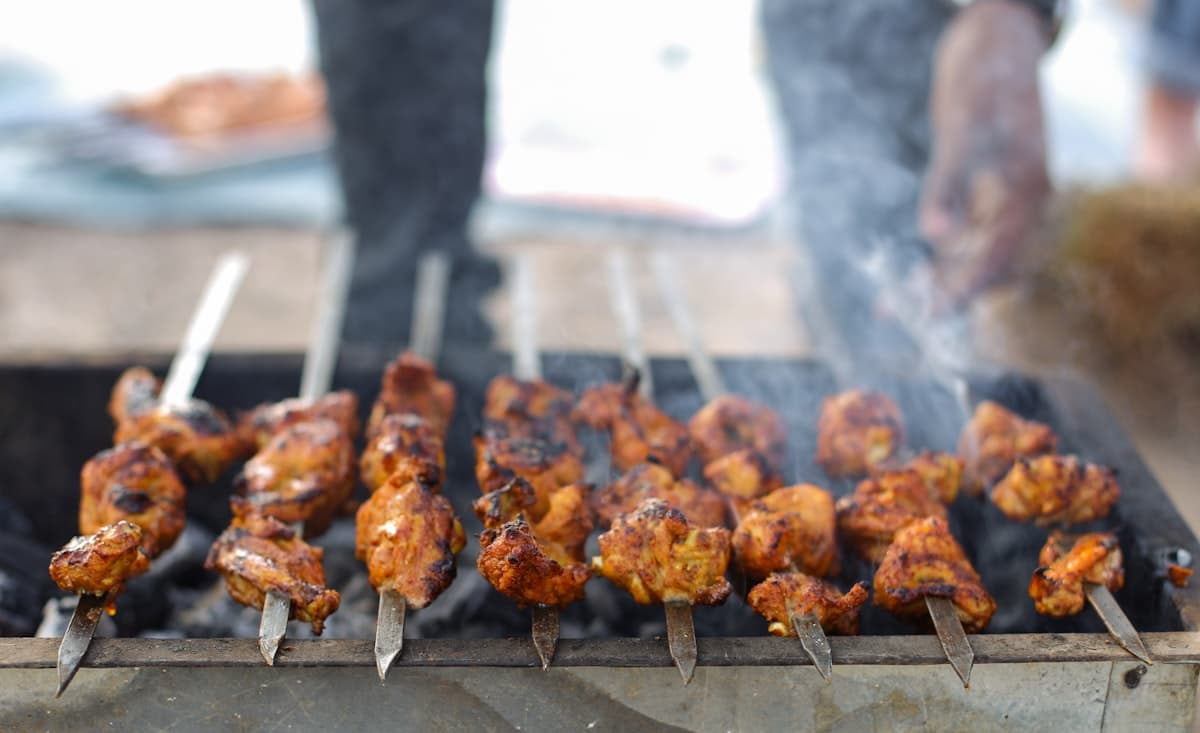
The classic sis kebab — cubes of marinated lamb threaded onto a skewer with vegetables and grilled over charcoal. The marinade varies by region but typically includes yogurt, onion juice, olive oil, and black pepper. The meat should be tender enough to pull off the skewer with bread. This is the most universal Turkish kebab and available everywhere, but quality varies enormously. Stick to restaurants with an ocakbasi (open charcoal grill) where you can watch the cook work.
Beyti Kebab (Istanbul)
Beyti kebab was invented at Beyti Restaurant in Istanbul's Florya neighborhood, which has been open since 1945. Seasoned ground lamb is grilled on a skewer, then wrapped in thin lavash bread with kasar cheese and served in slices with tomato sauce and yogurt. The presentation resembles a rolled-up crepe cut into pinwheels. Beyti Restaurant itself is a legendary Istanbul institution — worth the trip to Florya if you appreciate food history.
Cag Kebab (Erzurum)
Cag kebab is the ancestor of modern doner. Originating in Erzurum in eastern Turkey, marinated lamb is stacked horizontally on a skewer and roasted in front of a wood fire (not above — in front). Slices are carved off and served on lavash bread. The flavor is smokier and more rustic than standard doner. In Istanbul, Siirt Serif Büryan in Fatih serves an excellent version. If you travel to eastern Turkey, seek it out in its homeland.
Testi Kebab (Cappadocia)
One of Turkey's most theatrical dishes, testi kebab (pottery kebab) is a stew of lamb, tomatoes, peppers, garlic, and onions slow-cooked inside a sealed clay pot, which is dramatically cracked open at your table. The clay imparts a subtle earthy flavor, and the slow cooking makes the meat fall-apart tender. This is a Cappadocia specialty — almost every restaurant in Goreme and Urgup serves a version. The best ones use proper local lamb, not frozen meat. Dibek and Topdeck Cave in Goreme are solid choices.
Pro tip: Ask your waiter if the testi kebab is cooked in a real clay pot that is broken at the table. Some tourist restaurants reuse metal vessels — the real version uses a single-use terracotta pot that is sealed with bread dough and baked for hours.
Kebab Pricing Reference
| Kebab Type | Region | Price Range (2026) | Best City |
|---|---|---|---|
| Adana Kebab | Southeast | 200-400 TL | Adana |
| Urfa Kebab | Southeast | 200-380 TL | Sanliurfa |
| Iskender Kebab | Marmara | 250-500 TL | Bursa |
| Beyti Kebab | Istanbul | 300-550 TL | Istanbul |
| Cag Kebab | Eastern | 200-350 TL | Erzurum |
| Testi Kebab | Central | 300-500 TL | Cappadocia |
| Shish Kebab | Nationwide | 180-400 TL | Any ocakbasi |
4. Meze & Seafood Culture
If kebabs are Turkey's daytime identity, meze culture is its soul after dark. A proper Turkish dinner — especially along the coast — begins with a procession of small cold and hot dishes, accompanied by raki, conversation, and absolutely no rush. This is not appetizer before the main course. For many Turks, the meze is the meal.
The Raki-Fish Tradition (Raki Balik)
Raki balik — raki with fish — is one of Turkey's most cherished dining rituals. The evening begins with a table of cold meze, raki mixed with cold water (turning milky white — hence its nickname lion's milk), and slow conversation. Hot meze arrives next. Eventually, grilled or fried fish appears. The entire experience lasts 3-4 hours minimum. It is communal, unhurried, and genuinely one of the best dining experiences in the world.
The best places for raki balik in Istanbul are the meyhane (tavern) restaurants of Beyoglu — specifically Nevizade Sokak and the streets around Asmalimescit. Refik, Yakup 2, and Aheste are all excellent. Along the Bosphorus, Kiyı in Tarabya is legendary for its fish.
Essential Meze to Know
Cold meze:
- Haydari — thick strained yogurt with garlic, dill, and herbs
- Acili ezme — spicy tomato and pepper paste, hand-chopped
- Atom — fiery green pepper spread (extremely hot — proceed with caution)
- Babagannush (patlican salatasi) — smoky roasted eggplant with tahini
- Humus — chickpea puree with tahini and lemon (yes, Turkey has excellent hummus)
- Deniz borulcesi — samphire (sea beans) dressed in olive oil and lemon
- Fava — creamy broad bean puree with dill
- Topik — Armenian-origin chickpea and potato balls with currants and spices
Hot meze:
- Sigara boregi — fried filo rolls with white cheese
- Karides guvec — shrimp baked in tomato sauce with cheese
- Kalamar tava — fried calamari rings with tarator sauce
- Arnavut cigeri — Albanian-style fried liver cubes with onions
- Midye tava — beer-battered fried mussels with tarator
Seafood by Coast
Aegean Coast: The Aegean is olive oil country. Fish is often simply grilled and dressed with olive oil and lemon. Cipura (sea bream) and levrek (sea bass) are the stars. Alaçati, Cesme, and Ayvalik are known for exceptional seafood. Aegean restaurants also excel at ot kavurma — wild herb sautees — and zeytinyagli (olive oil-based) vegetable dishes.
Mediterranean Coast: Antalya and the surrounding coast offer a mix of grilled fish and Hatay-influenced flavors from the south. Karides (shrimp) is excellent here, and many restaurants serve ahtapot (octopus) grilled or in salads. The Kas and Kalkan area has superb waterfront fish restaurants.
Black Sea Coast: This is Turkey's anchovy (hamsi) kingdom. Hamsi is baked, fried, steamed, folded into bread (hamsi ekmek), baked into cornbread (hamsi kuymak), and even turned into dessert. The Black Sea coast also produces Turkey's best kuymak (melted cheese with cornmeal, similar to fondue) and pide (boat-shaped Turkish flatbread). Trabzon and Rize are the culinary capitals of the region.
Pro tip: At a fish restaurant, do not order from the menu. Walk to the fish display counter, choose your fish by pointing, and ask the waiter for the day's price per kilo. The waiter will weigh it in front of you. This is standard practice and not rude at all — it is expected.
5. Turkish Desserts & Sweets
Turkey's dessert culture is vast and deeply intertwined with history. Ottoman palace kitchens employed dedicated dessert chefs (helvaci) and Turkish sweets were traded across three continents. Today, the tradition lives on in every neighborhood pastry shop and street-side dessert counter.
Baklava
Baklava is Turkey's most famous dessert, but not all baklava is created equal. The best baklava in the world comes from Gaziantep, where it is made with locally grown Antep pistachios, hand-rolled yufka dough stretched to 40+ paper-thin layers, and clarified butter. The dough should shatter when you bite into it, not bend. The syrup should be light — not dripping — and the pistachios should be bright green and fragrant.
Gaziantep baklava (fistikli baklava) is a different experience from Istanbul baklava. In Gaziantep, the best shops include Imam Cagdas (operating since 1887), Gulluoglu (the original, not the Istanbul branch), and Koçak. In Istanbul, Karakoy Gulluoglu is the most famous — there is often a line, but it moves fast. A 1kg box of good pistachio baklava costs 800-1500 TL in 2026 depending on quality.
Other baklava varieties worth trying: sobiyet (baklava with cream), fistik sarma (rolled pistachio baklava), cevizli baklava (walnut baklava — more common in central and western Turkey), and burma kadayif (shredded phyllo rolled around pistachios).
Kunefe
Kunefe (also spelled knafeh) is a hot dessert made from shredded kadayif dough layered around melted unsalted cheese, baked until golden and crispy, then soaked in light syrup and topped with crushed pistachios. It is served sizzling hot from the pan and should be eaten immediately — the contrast between the crispy exterior and the stretchy melted cheese inside is the entire point. Kunefe originated in Hatay (Antakya) and is best there, but excellent versions exist in Istanbul and Gaziantep. The cheese used should be Hatay peyniri — a mild, unsalted string cheese that melts perfectly.
Turkish Delight (Lokum)
Lokum (Turkish delight) dates back to the late 1700s and comes in hundreds of varieties: rose water, pomegranate, pistachio, walnut, double-roasted with coconut, mastic, mint, and many more. The quality difference between good and tourist-grade lokum is enormous. Good lokum should be soft and slightly chewy, not rubbery or overly sugary. In Istanbul, Ali Muhiddin Haci Bekir (established 1777 — this is the shop that invented lokum) has branches in Eminonu and Beyoglu. Hafiz Mustafa is another excellent option with several locations. Avoid the vacuum-packed boxes sold at tourist shops near the Grand Bazaar — they are often stale.
Sutlac (Rice Pudding)
Sutlac is Turkish rice pudding, baked in a clay bowl until a caramelized skin forms on top. It is served cold and is one of the most comforting desserts you will ever eat. The texture should be creamy but not gummy, with distinct rice grains. Almost every lokanta (casual restaurant) serves it. Sutis chain does an excellent version, and old-school muhallebici (pudding shops) like Hamdi Muhallebicisi specialize in it.
Tavuk Gogsu
Tavuk gogsu is one of the world's most unusual desserts — a sweet milk pudding made with finely shredded chicken breast. Before you recoil: you cannot taste the chicken at all. It adds a subtle fibrous texture to the silky milk pudding, creating something entirely unique. This Ottoman palace dessert is a must-try for adventurous eaters. The version at Kanaat Lokantasi in Uskudar is considered the benchmark.
Dondurma (Maras Ice Cream)
Maras dondurma (Kahramanmaras ice cream) is unlike any ice cream you have had. Made with salep (orchid root powder) and mastic resin, it has an elastic, chewy texture that resists melting. It is so thick it can be eaten with a knife and fork. The famous Maras ice cream vendors with their long-handled paddles who play tricks on customers — pretending to hand you the cone, then snatching it away — are a beloved street spectacle, especially on Istiklal Caddesi in Istanbul. The performance is fun, but the ice cream itself is genuinely special. Traditional flavors are plain (sade) and pistachio.
Pro tip: For the best dondurma experience, skip the tourist-oriented trickster vendors and visit a proper Mado ice cream shop (a national chain from Kahramanmaras) or Yasar Usta in the Kadikoy market.
6. Turkish Drinks
What you drink in Turkey is as culturally important as what you eat. Tea and coffee are not just beverages — they are rituals, social bonds, and daily rhythms.
Turkish Tea (Cay)
Cay (pronounced "chai") is Turkey's national drink. Turkey is the world's largest per-capita tea consumer, and it is not close — the average Turk drinks 3-4 kilograms of tea per year. Tea is served in tulip-shaped glass cups (ince belli), always without milk, and with sugar cubes on the side. It is brewed strong using a double-stacked teapot called a caydanlik.
You will be offered tea everywhere: in shops (while browsing — it is not a sales trick, it is hospitality), at the barber, in someone's home, after a meal, before a meal, during a business meeting, while waiting for a bus. Refusing tea is polite but rarely happens. The tea itself is grown on Turkey's Black Sea coast around Rize — if you visit, the tea plantations on the steep green hillsides are stunning.
Turkish Coffee (Turk Kahvesi)
Turk kahvesi is not just a drink — it is a UNESCO Intangible Cultural Heritage. Finely ground coffee (almost like powder) is brewed with water and sugar in a small copper pot called a cezve, then poured unfiltered into a small cup. You drink the liquid and leave the grounds at the bottom. It is strong, rich, and served with a small glass of water and often a piece of Turkish delight.
When ordering, specify sweetness: sade (no sugar), az sekerli (little sugar), orta (medium), or cok sekerli (very sweet). The sugar is added before brewing, not after.
Reading the Coffee Cup (Fal)
After drinking, place the saucer on top of the cup, make a wish, and flip it upside down. Once it cools, someone (often a grandmother, a friend, or a professional falci) reads your fortune from the patterns the coffee grounds leave on the cup. This tradition — kahve fali — is taken semi-seriously: most Turks will say they do not believe it, then listen intently to every word. Several cafes in Istanbul's Grand Bazaar and Balat neighborhood offer coffee fortune readings for tourists.
Ayran
Ayran is a cold yogurt drink made by mixing yogurt, water, and a pinch of salt. It sounds simple because it is — and it is the perfect accompaniment to grilled meat, kebabs, and lahmacun. Ayran should be served ice-cold, freshly churned and slightly foamy. The packaged version is fine, but the hand-churned version served in copper cups at kebab restaurants is noticeably better. It is also Turkey's most effective hangover cure.
Sahlep (Salep)
Sahlep is a warm, thick, milky drink made from ground orchid tubers, topped with cinnamon. It is Turkey's quintessential winter drink, sold from street carts and cafes from November through March. The real thing — made from actual salep powder — is increasingly rare and expensive because wild orchid harvesting is restricted. Many places use a cornstarch substitute. For the real version, look for independent cafes rather than chains, and expect to pay more. It is worth it — the genuine version has a subtle, floral, almost vanilla-like flavor that the substitute cannot replicate.
Salgam
Salgam suyu is fermented purple carrot juice, sour and slightly spicy, and it is the traditional accompaniment to Adana kebab. If you have not tried it, it sounds unappealing. It is actually incredibly refreshing, slightly acidic, and perfect for cutting through rich, fatty meat. Order it acili (spicy) or acisiz (mild). It is most popular in Adana, Mersin, and the southeast, but available at most kebab restaurants nationwide.
Raki Guide
Raki is Turkey's national alcoholic drink — an anise-flavored spirit similar to Greek ouzo, French pastis, and Middle Eastern arak, but with its own distinct character. It is 45% alcohol, clear in the bottle, and turns milky white when mixed with cold water. The standard brand is Yeni Raki. Premium options include Efe (fresh grape raki) and Kulup Raki.
Raki is always drunk with food — never alone, never as a shot. The ritual: pour raki into a tall, narrow glass, add cold water (roughly 1:1 or 1:2 ratio), add ice (though purists add water first, then ice). Sip slowly alongside meze and fish. A proper raki table lasts hours and involves conversation, laughter, and a specific kind of Turkish melancholy called huzun. It is one of the defining cultural experiences of Turkey.
Pro tip: Raki is quite strong. Pace yourself, eat meze throughout, and drink water between sips. Your first raki dinner should be at a traditional meyhane (tavern) where the waiter can guide you through the meze selection and pacing.
7. Regional Food Map
Turkey's food varies dramatically by region. Here is what to eat where.
Istanbul
Istanbul is not a regional cuisine — it is every regional cuisine, all in one city. As Turkey's largest metropolis (16+ million people), it attracts cooks and flavors from every corner of the country. The best strategy is to eat by neighborhood:
- Kadikoy (Asian side): The food market (Kadikoy Carsisi) is one of Istanbul's best food experiences — stalls selling fresh produce, cheese, olives, pickles, spices, and prepared foods. The surrounding streets have excellent casual restaurants.
- Karakoy/Galata: Trendy restaurants alongside traditional lokanta (home-cooking) spots. Great for breakfast and modern Turkish cuisine.
- Fatih/Eminonu: Conservative, traditional, and home to some of Istanbul's oldest food establishments. This is where to find cag kebab, Southeastern specialties, and the Spice Bazaar (Misir Carsisi).
- Besiktas: Lively fish market and excellent breakfast spots. The Besiktas Carsisi (market) on Saturday mornings is fantastic.
- Beyoglu (Taksim/Istiklal): Meyhane culture, international restaurants, and late-night street food. Nevizade Sokak is the meze and raki heartland.
Gaziantep (Turkey's Food Capital)
If you are serious about Turkish food, Gaziantep (often called Antep) is the pilgrimage. UNESCO recognized Gaziantep as a Creative City of Gastronomy, and it is not honorary — Antep has more named dishes (over 500 in its official catalog) than most countries. Essential eating:
- Baklava — the world's best (Imam Cagdas, Gulluoglu, Kocak)
- Lahmacun — thinner and spicier than elsewhere
- Beyran — a fiery lamb bone broth with rice and garlic, eaten for breakfast
- Ali Nazik — smoky eggplant puree with yogurt, topped with lamb
- Yuvalama — tiny lamb-filled dumplings in yogurt broth
- Katmer — paper-thin pastry layered with clotted cream and pistachios, a breakfast specialty
- Antep fistigi — the pistachio itself, the region's green gold, in everything
Pro tip: Gaziantep is a 1.5-hour flight from Istanbul and makes an excellent 2-3 day food-focused side trip. Almost no international tourists visit, so prices are lower and the experience is deeply authentic.
Antalya & Mediterranean Coast
The Mediterranean coast is citrus country, and the cuisine reflects it — lighter, fresher, with abundant vegetables and seafood. Key dishes:
- Piyaz — white bean salad with tahini dressing (Antalya's signature dish)
- Tirmis — lupin beans snack, sold everywhere
- Serpme borek — thin flatbread with various fillings
- Grilled sea bass and bream — simply prepared, incredibly fresh
- Sac kavurma — lamb stir-fried on a convex iron plate
Aegean Region (Izmir, Ayvalik, Bodrum)
The Aegean is Turkey's olive oil civilization. Zeytinyagli (olive oil-based) dishes dominate: green beans, artichokes, stuffed vine leaves, broad beans — all cooked in olive oil, served at room temperature, and eaten with bread. Izmir kofte (meatballs baked in tomato sauce with potatoes) is the region's famous comfort food. Boyoz is a flaky, slightly sour pastry unique to Izmir, best eaten warm with a hard-boiled egg — preferably from Alsancak bakeries in the morning.
Black Sea Region (Trabzon, Rize)
Lush, green, rainy, and mountainous, the Black Sea coast has Turkey's most distinctive cuisine:
- Hamsi (anchovy) — cooked in every conceivable way: fried, baked into bread, steamed, in pilafs
- Kuymak (muhlama) — melted local cheese with cornmeal and butter, served bubbling
- Pide — Trabzon-style, boat-shaped flatbread with various toppings (better than pizza, fight us)
- Karalahana corbasi — Black Sea kale soup
- Laz boregi — a sweet pastry unique to the Laz people of the eastern Black Sea
Central Anatolia (Kayseri, Konya)
The vast central plateau is home to Turkey's heartiest food — built for cold winters and agricultural life:
- Manti — Turkish ravioli, tiny dumplings filled with spiced meat, topped with garlic yogurt and red pepper butter. Kayseri manti is the definitive version — the dumplings should be small enough that 40 fit on a spoon (locals will judge you if they are too big)
- Etli ekmek (Konya) — a meter-long thin flatbread topped with minced meat, like a Turkish pizza. Baked in a stone oven at extreme heat.
- Pastirma (Kayseri) — air-dried cured beef coated in cemen (a paste of fenugreek, garlic, and paprika). Kayseri is the pastirma capital of Turkey.
8. Best Food Experiences for Tourists
Beyond restaurants, Turkey offers hands-on culinary experiences that make for unforgettable travel memories. Here are the best ways to go deeper into Turkish food culture.
Cooking Classes
Cooking classes have become popular across Turkey, and the best ones teach you not just recipes but the cultural context behind the food. In Istanbul, look for classes that include a market visit — shopping at the Kadikoy market or Spice Bazaar before cooking gives you the full experience. Expect to make 4-6 dishes over 3-4 hours: a meze spread, a main course (often kebab or dolma), and a dessert. Most classes include a full meal of everything you prepared. Prices range from 80-200 USD per person.
In Cappadocia, several hotels and independent operators offer cooking classes featuring Central Anatolian dishes: manti, testi kebab, gozleme (stuffed flatbread), and local pastries. Some include visits to local farms and vineyards.
Food Tours
A guided food tour is the single best way to eat well on your first day in a new city. Good food tours take you to places you would never find on your own — the tiny kokorec stand in a back alley, the family-run borek shop that has been open since 1952, the cheese counter at the back of the market. In Istanbul, focus on tours of Kadikoy (Asian side) or Fatih/Balat (historic peninsula). Avoid overly touristy "Old City" food tours that take you only to places near the Blue Mosque — the best food in Istanbul is not in Sultanahmet.
Market Visits
Turkish markets (pazar) are sensory overload in the best way. Weekly neighborhood pazars sell fresh produce, cheese, olives, honey, spices, and household goods at much lower prices than shops. The most impressive permanent markets include:
- Kadikoy Carsisi (Istanbul) — fish, cheese, pickles, produce, spices. Open daily.
- Misir Carsisi / Spice Bazaar (Istanbul) — historic spice market near Eminonu. Touristy but still worth visiting for spices, lokum, and dried fruits.
- Kemeraltı (Izmir) — sprawling historic bazaar with incredible street food.
- Bakircılar Carsisi (Gaziantep) — copper bazaar area with baklava shops and spice dealers.
Farm-to-Table Experiences
Agritourism is growing in Turkey, particularly in the Aegean and Mediterranean regions. Small family-run farms in areas like Sirince (near Ephesus), the Bozburun Peninsula, and the Cappadocia countryside offer meals prepared from produce grown on-site: freshly picked vegetables, handmade cheeses, bread baked in a wood-fired oven, and olive oil pressed from the farm's own trees. These experiences typically need to be arranged in advance through tour operators or local contacts. They are among the most memorable meals you will have in Turkey.
9. Vegetarian & Vegan in Turkey
Turkey is often perceived as a meat-heavy destination, and while kebabs get the most attention, the reality is that Turkish cuisine has a deep tradition of vegetable and plant-based cooking. The Ottoman zeytinyagli tradition alone — dozens of dishes cooked in olive oil, served at room temperature, and eaten without meat — provides a rich vegetarian repertoire.
Vegetarian-Friendly Dishes
- Mercimek corbasi — red lentil soup. Served at every meal, everywhere. Always vegetarian, always excellent.
- Zeytinyagli yaprak sarma — vine leaves stuffed with rice, currants, and pine nuts (no meat)
- Zeytinyagli fasulye — green beans in olive oil and tomato sauce
- Imam bayildi — stuffed eggplant braised in olive oil (one of the great dishes of all time)
- Kisir — bulgur salad with pomegranate molasses, tomato paste, and herbs (Turkish tabbouleh)
- Gozleme — thin flatbread filled with spinach and cheese, potato, or herbs, cooked on a griddle
- Pide — with cheese, egg, or vegetable toppings (specify "etsiz" — without meat)
- Menemen — the egg and tomato breakfast dish
- All breakfast items — Turkish breakfast is naturally mostly vegetarian
- All meze — most cold meze are vegetarian or vegan
Vegan Options
Strict vegan options are available but require more attention. Useful phrases:
- "Etsiz" — without meat
- "Sütsüz" — without dairy
- "Yumurtasiz" — without eggs
- "Sadece sebze" — only vegetables
Vegan-safe dishes include: mercimek corbasi (usually — confirm no butter), kisir, many zeytinyagli dishes, acili ezme, fresh salads, rice pilav, bulgur pilav, fasulye pilezki (white bean stew — confirm no meat stock), and seasonal vegetable dishes.
In Istanbul, dedicated vegan/vegetarian restaurants are growing: Nuns Vegan Cafe (Karakoy), Vegan Istanbul (Kadikoy), and Parsifal (Beyoglu) are worth seeking out.
Pro tip: At traditional restaurants, tell the waiter "Ben vejetaryenim" (I am vegetarian) and ask them to recommend dishes. Turkish hospitality means they will go out of their way to accommodate you, often bringing dishes that are not even on the menu.
10. Food Pricing Guide
One of Turkey's great advantages for travelers is that incredible food is available at every price point. Here is what to expect in 2026. Note that prices vary significantly between tourist areas (Sultanahmet, Taksim) and local neighborhoods (Kadikoy, Besiktas, Fatih).
Street Food & Quick Bites
| Item | Price (TL) | Approx. USD |
|---|---|---|
| Simit | 15-25 TL | $0.40-0.70 |
| Doner (ekmek arasi) | 100-180 TL | $2.70-5.00 |
| Lahmacun (1 piece) | 50-80 TL | $1.40-2.20 |
| Kokorec (half) | 100-140 TL | $2.70-3.80 |
| Balik ekmek | 150-250 TL | $4.00-6.50 |
| Kumpir (loaded) | 120-200 TL | $3.30-5.50 |
| Tantuni durum | 80-130 TL | $2.20-3.60 |
| Islak hamburger | 40-60 TL | $1.10-1.60 |
| Midye dolma (5 pieces) | 75-125 TL | $2.00-3.40 |
| Glass of cay (tea) | 15-30 TL | $0.40-0.80 |
| Turkish coffee | 60-100 TL | $1.60-2.70 |
| Ayran | 20-40 TL | $0.55-1.10 |
Sit-Down Restaurants
| Meal Type | Price per Person (TL) | Approx. USD |
|---|---|---|
| Lokanta (home-style, lunch) | 150-250 TL | $4-7 |
| Kebab restaurant | 250-500 TL | $7-14 |
| Fish restaurant (mid-range) | 500-1000 TL | $14-27 |
| Meyhane (raki & meze evening) | 800-1500 TL | $22-41 |
| Serpme kahvalti (breakfast spread) | 250-500 TL | $7-14 |
| Fine dining / rooftop | 1500-4000 TL | $41-110 |
Tipping Culture
Tipping in Turkey is appreciated but not as rigidly expected as in the US. Here are the norms:
- Restaurants: 10-15% is standard. At upscale restaurants, check if a service charge is already included.
- Cafes/tea houses: Rounding up or leaving small change is sufficient.
- Street food: No tipping expected.
- Food tours: 10-20% to your guide is appropriate and appreciated.
- Hotel restaurants: Tip is often included; leave extra only for exceptional service.
Pro tip: Always tip in Turkish lira, not in foreign currency. Small bills (10-20 TL notes) are most practical. Hand the tip directly to your waiter when possible rather than leaving it on the table.
11. Frequently Asked Questions
Is Turkish food spicy?
Most Turkish food is well-seasoned but not spicy-hot. The exception is southeastern cuisine (Adana, Urfa, Gaziantep, Hatay), which uses more chili. Istanbul food is generally mild. If you want spice, ask for "acili" (spicy). If you want to avoid it, say "acisiz" (without spice). Dishes are typically not prepared very hot unless you request it.
Is it safe to eat street food in Turkey?
Yes. Turkish food safety standards are generally high, and popular street food vendors have high turnover — meaning ingredients are fresh. The key rule applies everywhere: eat where locals eat. If a street food stall has a line of Turkish customers, it is safe and it is good. Avoid places with no customers and pre-made food sitting in warming trays. Tap water in Istanbul is technically safe but most locals drink bottled water out of preference.
What time do Turkish people eat?
Breakfast: 8-10am (later on weekends — serpme breakfast can start at 10-11am). Lunch: 12-2pm. Dinner: 7-9pm, though restaurant kitchens stay open until 10-11pm in cities. Raki-meze dinners can start at 8pm and run past midnight. Street food is available late — many shops stay open until 2-3am, especially on weekends.
Can I find good vegetarian food in Turkey?
Absolutely. See our vegetarian section above. Turkish cuisine has dozens of naturally meat-free dishes, especially in the zeytinyagli (olive oil-based) tradition. Breakfast is almost entirely vegetarian. The meze table is full of vegetable and legume-based options. Dedicated vegetarian and vegan restaurants are growing in Istanbul.
What should I absolutely not miss?
If you try only five things: (1) a proper serpme breakfast, (2) Adana or Urfa kebab from a quality ocakbasi, (3) baklava from Karakoy Gulluoglu, (4) a raki-meze dinner at a Beyoglu meyhane, and (5) a simit on a Bosphorus ferry with a glass of cay. These five experiences will give you a core understanding of Turkish food culture.
How do I say "check, please" in Turkish?
"Hesap, lutfen" — that is all you need. You can also make a writing gesture in the air, which is universally understood. In casual restaurants, you often pay at the register (kasa) near the door rather than at the table.
Is alcohol available in Turkey?
Yes. Turkey produces excellent wine (particularly from Cappadocia, Thrace, and the Aegean), beer (Efes is the main brand), and raki. Alcohol is widely available in restaurants, bars, and supermarkets. Some conservative neighborhoods may have fewer options, but in tourist areas and major cities, availability is not an issue. Alcohol prices are higher than in Europe due to taxation — expect to pay around 1,300 TL for a 70cl bottle of rakı in a supermarket (much more at a meyhane), and 150-300 TL for a beer at a restaurant.
Should I book restaurants in advance?
For high-end restaurants and popular weekend breakfast spots in Istanbul — yes, book at least a day ahead. For most kebab restaurants, lokantas, and casual dining — no reservation needed, just walk in. Friday and Saturday evenings in popular meyhane districts (Nevizade, Asmalimescit) can be very busy, so booking is wise. For fish restaurants along the Bosphorus, always book on weekends.
What is the best food city in Turkey besides Istanbul?
Gaziantep, without question. It is the undisputed food capital of Turkey and a UNESCO Creative City of Gastronomy. If your trip allows a 2-3 day detour, Gaziantep will be the culinary highlight. After Gaziantep: Hatay (Antakya) for its unique Arab-Turkish fusion cuisine, and Trabzon for Black Sea specialties.
Can I bring Turkish food home?
Yes — some of the best souvenirs from Turkey are edible. Baklava keeps for 2-3 weeks (get it vacuum-packed). Turkish delight keeps for months. Spices from the Spice Bazaar (pul biber / red pepper flakes, sumac, za'atar, dried mint) are lightweight and keep indefinitely. Turkish coffee is another great take-home gift. Sucuk and pastirma can be brought through customs if vacuum-sealed (check your home country's import rules). Most good shops will pack items for travel.
Taste Turkey With a Local Guide
Join our food-focused daily tours and cooking experiences.
Expert local guides • Hidden gem restaurants • Market tours • Cooking classes
Explore Food Tours →Trusted by thousands of travelers since 2010
📚 Continue Reading: More Turkey Guides
Explore our comprehensive travel guide series to plan the perfect Turkey trip: