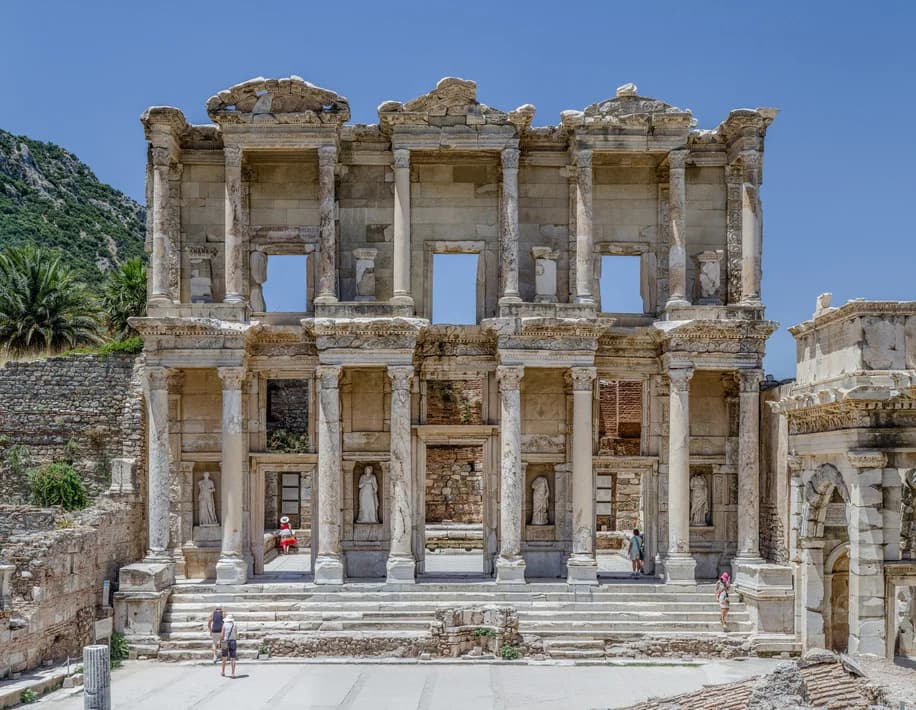
Turkey sits at the crossroads of civilizations — literally. This is a land where Hittites carved the first peace treaty in stone, where Greeks built cities that rivaled Athens, where Romans engineered aqueducts that still stand, where Byzantines raised the greatest dome in Christendom, and where Ottomans forged an empire stretching across three continents. No other country on Earth packs 10,000 years of continuous human history into such a compact, traveler-friendly geography.
Whether you are standing in the marble streets of Ephesus, descending into the underground cities of Cappadocia, gazing up at the mosaics of Hagia Sophia in Istanbul, or tracing the Lycian rock tombs along the turquoise coast, Turkey delivers historical experiences that are visceral and unforgettable. This guide covers every major historical site you should know about, organized by era, with practical visiting tips, entrance fees, and suggested itineraries for 2026.
At Funny Tourism, we have been guiding travelers through Turkey's historical treasures since 2010. Many of our tour packages include the sites covered here with professional historian guides, skip-the-line access, and all entrance fees included. Let us walk you through ten millennia of human achievement.
Timeline of Turkey's History
Before diving into individual sites, here is a condensed timeline to help you place everything in context. Turkey's history is not a single narrative — it is layer upon layer of civilizations, each building on (and often literally on top of) the previous one.
| Period | Dates | Key Events & Legacy |
|---|---|---|
| Catalhoyuk & Neolithic | ~7500-5500 BC | One of the world's first cities. Mudbrick houses with rooftop entrances, wall paintings, earliest agriculture in Anatolia. |
| Hittite Empire | ~1600-1178 BC | Capital at Hattusa (Bogazkale). First known peace treaty (Treaty of Kadesh with Egypt, 1259 BC). Iron-working pioneers. |
| Phrygian & Lydian Kingdoms | ~1200-546 BC | King Midas, Gordian Knot legend. Lydians invented coined money (~600 BC). Sardis as capital. |
| Greek Colonization | ~1000-334 BC | Ionian cities: Ephesus, Miletus, Halicarnassus. Birth of philosophy (Thales), history (Herodotus), medicine (Hippocrates influenced here). |
| Hellenistic Period | 334-30 BC | Alexander the Great conquers Anatolia. Successor kingdoms: Pergamon, Pontus, Bithynia. Great library at Pergamon. |
| Roman Period | 30 BC - 395 AD | Ephesus becomes capital of Roman Asia. Massive infrastructure: roads, aqueducts, theaters. St. Paul's missionary journeys across Anatolia. |
| Byzantine Empire | 395-1453 AD | Constantinople as capital of Eastern Rome. Hagia Sophia built (537). Christian art and architecture flourish. Over 1,000 years of continuous rule. |
| Seljuk Sultanate | 1077-1307 | Turks arrive in Anatolia after Battle of Manzikert (1071). Konya as capital. Rumi and Sufi mysticism. Caravanserais along Silk Road. |
| Ottoman Empire | 1299-1922 | Conquest of Constantinople (1453). Empire spans three continents at peak under Suleiman the Magnificent. Architect Sinan transforms skylines. |
| Republic of Turkey | 1923-present | Mustafa Kemal Ataturk founds secular republic. Ankara replaces Istanbul as capital. Latin alphabet adopted. Rapid modernization. |
Pro tip: Print or screenshot this timeline before your trip. When you are standing in Ephesus, it helps to know that the city you see was rebuilt by Romans on top of Greek foundations, which were built near a Hittite-era settlement. Layers within layers.
Ancient Greek & Roman Sites
Western and southern Turkey were once the heartland of the Greek and Roman worlds. The Aegean and Mediterranean coasts are dotted with ruins that in many cases are better preserved than anything in Greece or Italy. These are not roped-off museum pieces — you walk through them, touch the marble, and feel the grooves worn by chariot wheels in the stone streets.
Ephesus
Ephesus is Turkey's most visited archaeological site and one of the best-preserved ancient cities in the Mediterranean world. At its peak under Roman rule, Ephesus had a population of around 250,000 and served as the capital of the Roman province of Asia. Walking down its marble-paved Curetes Street, flanked by columns and mosaic-floored shops, you get a vivid sense of what daily life looked like 2,000 years ago.
Library of Celsus
The iconic two-story facade of the Library of Celsus is the most photographed monument in Turkey after Hagia Sophia. Built in 117 AD as a monumental tomb for the Roman senator Tiberius Julius Celsus Polemaeanus, it once held 12,000 scrolls — making it the third-largest library in the ancient world after Alexandria and Pergamon. The facade features four female statues representing Wisdom (Sophia), Knowledge (Episteme), Intelligence (Ennoia), and Virtue (Arete). The originals are in Vienna's Ephesus Museum, but the replicas on site are faithful and striking. Visit early morning for the best photographs — by 10 AM the tour groups arrive and it becomes difficult to get a clear shot.
Great Theatre
Carved into the slope of Mount Pion, the Great Theatre of Ephesus seated 25,000 spectators and is still used for concerts today. This is where the silversmiths' riot described in the Bible's Acts of the Apostles took place — an angry mob protested against St. Paul because his preaching was hurting sales of Artemis idol souvenirs. Stand at the top tier for a panoramic view down Harbour Street, the colonnaded road that once led directly to the Aegean Sea (the coastline has since receded several kilometers).
Temple of Artemis
One of the Seven Wonders of the Ancient World, the Temple of Artemis today is represented by a single reconstructed column standing in a marshy field about 1.5 km from the main Ephesus site. It is admittedly underwhelming compared to its ancient glory — the original temple was four times the size of the Parthenon — but its historical significance is immense. The British Museum in London holds some of the recovered column drums and sculptural fragments. Still worth a stop for the story alone.
Pro tip: Buy the Ephesus combo ticket that includes the Terrace Houses (Yamaç Evleri). These are the ancient luxury apartments of Ephesus's wealthy residents, with remarkably preserved floor mosaics, wall frescoes, and underfloor heating systems. They are the highlight that most rushed tour groups skip, and they offer welcome shade in summer.
Troy
Yes, Troy is real, and it is in Turkey — near the town of Canakkale on the Dardanelles strait. The archaeological site of Troy (Truva) contains not one but nine layers of settlement spanning from 3000 BC to 500 AD. The layer identified as Troy VII is the most likely candidate for Homer's legendary city besieged by the Greeks in the Iliad.
Let us be honest: Troy is not as visually spectacular as Ephesus. The ruins are fragmentary, and much of what you see requires imagination and a good guide to bring alive. What makes Troy exceptional is its mythological significance and the story of its discovery by Heinrich Schliemann in the 1870s — a story that is itself controversial, as Schliemann damaged many layers in his haste to find "Priam's Treasure." The on-site museum (opened 2018) is excellent, with interactive displays that help visualize each layer and the artifacts found within them. The wooden Trojan Horse replica at the entrance is touristy but makes for a fun photo.
Pro tip: Combine Troy with a Gallipoli tour. The two sites are on opposite sides of the Dardanelles, and many travelers do both in a two-day trip from Istanbul. Our Gallipoli & Troy packages include ferry crossings and expert battlefield guides.
Pergamon (Bergama)
The ancient city of Pergamon (modern Bergama) was one of the great intellectual centers of the ancient world. Its library rivaled Alexandria's, and when Egypt banned papyrus exports to strangle the competition, Pergamon invented parchment (pergamena) as an alternative. The Acropolis sits dramatically atop a steep hill overlooking the modern town, reached by cable car or a winding road.
The Acropolis
At the summit you will find the steepest theater in the ancient world — 10,000 seats carved into an almost vertical hillside with jaw-dropping views of the Bakircay plain below. The foundations of the Great Altar of Zeus (the altar itself is in Berlin's Pergamon Museum, a source of ongoing repatriation debate) and the ruins of the Temple of Athena and the royal palaces are impressive even in their fragmentary state. The engineering required to build a city of this complexity on such a steep hilltop is remarkable.
The Asclepion
Below the Acropolis lies the Asclepion, one of the ancient world's most important healing centers. Think of it as the Mayo Clinic of 200 AD. Patients walked along a sacred colonnade, received dream therapy in sleeping chambers, bathed in mineral springs, and attended theater performances as part of their treatment. The physician Galen — whose medical theories dominated Western medicine for over a thousand years — trained here. The underground treatment tunnel is atmospheric and surprisingly intact.
Pro tip: Take the cable car (teleferik) up to the Acropolis and walk down. The descent is manageable and gives you time to absorb the views. The cable car ride itself offers excellent photo opportunities of the ancient city from above.
Aphrodisias
Aphrodisias, located in the inland Caria region near the town of Geyre, is one of Turkey's most underrated archaeological sites and a UNESCO World Heritage Site since 2017. Named after Aphrodite, the goddess of love, this city was renowned in the Roman world for two things: its school of sculpture and its massive stadium.
The Stadium of Aphrodisias is the best-preserved ancient stadium in the Mediterranean, seating 30,000 spectators across 262 meters. Unlike most ancient stadiums that survive as grassy outlines, this one retains most of its seating tiers. The Sebasteion, a temple complex dedicated to Roman emperors, features relief panels depicting mythological scenes and imperial propaganda that rival anything in Rome. The on-site museum houses an extraordinary collection of marble sculptures produced by local workshops — sensuous, technically brilliant, and mostly intact.
Pro tip: Aphrodisias gets far fewer visitors than Ephesus despite being equally impressive in many ways. If you want the experience of having a world-class ancient city almost to yourself, this is the place. Combine it with a visit to Pamukkale, which is about 90 minutes away.
Hierapolis & Pamukkale
The ancient city of Hierapolis sits directly above the famous white calcium terraces of Pamukkale — creating one of the most surreal landscapes in Turkey. The thermal springs that created the gleaming white travertines also attracted settlers since the 2nd century BC, and Hierapolis grew into a major Roman spa city.
The ruins include a beautifully preserved Roman theater with intricate stage-building reliefs, one of the largest ancient necropolises (cemeteries) in Anatolia with over 1,200 tombs spanning Hellenistic to early Christian periods, and the remains of baths, temples, and a colonnaded main street. The Antique Pool (Cleopatra's Pool) lets you swim among submerged Roman columns in warm, mineral-rich water — it costs extra but is an unforgettable experience.
The white terraces of Pamukkale themselves are a natural wonder: hot, calcium-rich thermal water cascading down the hillside over millennia has created a series of brilliant white pools and frozen waterfalls. You walk barefoot across the terraces (shoes must be removed to protect the formations), and the warm water pooling in the natural basins makes this a unique combination of natural and historical wonder.
Pro tip: Visit Pamukkale at sunset when the white terraces glow pink and orange. Arrive after 4 PM for smaller crowds and the best light. If you are staying overnight in the area, the south entrance opens earlier and is less crowded than the main town entrance.
Byzantine Heritage
The Byzantine Empire — the eastern continuation of Rome — ruled from Constantinople (modern Istanbul) for over a thousand years. Byzantine art, architecture, and religious tradition left an indelible mark on Istanbul in particular, and several of these monuments rank among the greatest achievements in human architectural history.
Hagia Sophia
There is no building in the world quite like Hagia Sophia. Commissioned by Emperor Justinian I and completed in just five years (532-537 AD), it was the largest cathedral in the world for nearly a thousand years. The central dome, 31 meters in diameter and 55 meters high, appears to float on a ring of windows — an engineering marvel that stunned contemporary observers and continues to awe visitors today.
Hagia Sophia has lived multiple lives: a Byzantine cathedral for 916 years, an Ottoman mosque from 1453, a museum from 1934, and a mosque again since 2020. This dual identity is visible everywhere — Byzantine mosaics depicting Christ, the Virgin Mary, and emperors coexist with Ottoman calligraphic roundels bearing the names of Allah, Muhammad, and the early caliphs. The Deesis Mosaic on the upper gallery, depicting Christ flanked by the Virgin Mary and John the Baptist, is one of the finest surviving works of Byzantine art, remarkable for its naturalistic facial expressions and use of light.
As a functioning mosque, Hagia Sophia is free to enter (as of 2025, entrance fees were reintroduced for tourists at approximately 25 EUR / $27). Non-Muslim visitors should be respectful of prayer times, remove shoes, and women should cover their heads (scarves are available at the entrance). The upper galleries — which house the best mosaics — are periodically accessible; check current access before visiting.
Pro tip: Visit Hagia Sophia first thing in the morning, ideally on a weekday. The building faces east, and morning light streaming through the apse windows illuminates the interior gold mosaics in a way that afternoon light cannot replicate. Combine with the nearby Basilica Cistern and Topkapi Palace for a full day of Byzantine and Ottoman history.
Chora Church (Kariye Museum)
If Hagia Sophia represents the grandeur of Byzantine architecture, the Chora Church (Kariye Camii/Museum) represents the pinnacle of Byzantine art. This smaller church in Istanbul's Edirnekapi neighborhood contains the most complete and best-preserved cycle of Byzantine mosaics and frescoes anywhere in the world, dating from the early 14th century.
The mosaics in the inner and outer narthex depict the life of Christ and the life of the Virgin Mary with extraordinary detail and emotional depth. The Anastasis fresco (Resurrection) in the parekklesion (side chapel) — showing Christ pulling Adam and Eve from their tombs — is widely considered the greatest masterpiece of late Byzantine painting. The figures are dynamic and expressive in a way that anticipates the Italian Renaissance by a century.
Like Hagia Sophia, the Chora Church was converted to a mosque in 2020 after decades as a museum. Access to the mosaics may be limited during prayer times. Despite the smaller size and less famous name, art historians consistently rank the Chora's decoration above anything in Hagia Sophia for artistic quality.
Underground Cisterns
Beneath the streets of Istanbul lies a hidden world of Byzantine cisterns — underground water storage chambers that kept Constantinople supplied during sieges. The most famous is the Basilica Cistern (Yerebatan Sarnici), built by Justinian I in 532 AD. Its 336 marble columns, many recycled from ruined temples, rise from the water in atmospheric rows lit by colored lights. Two columns rest on carved Medusa heads — one sideways, one upside-down — whose origin remains debated by historians.
After a major restoration completed in 2022, the Basilica Cistern now features enhanced lighting, walkways, and multimedia installations that complement the ancient atmosphere. It is one of Istanbul's most atmospheric sites and a welcome cool escape on hot summer days.
Beyond the Basilica Cistern, Istanbul has over 80 known Byzantine cisterns, and several others are open to visitors, including the Theodosius Cistern (Serefiye Sarnici), which reopened in 2023 after extensive restoration. These smaller cisterns are less crowded and equally evocative.
Church of St. John (Selcuk)
On Ayasuluk Hill in Selcuk, overlooking the plains of Ephesus, stand the ruins of the Basilica of St. John — built by Emperor Justinian I in the 6th century over the believed burial site of the Apostle John. At its peak, this was one of the largest churches in the world, rivaling Hagia Sophia in ambition if not in preservation.
Today the columns and walls are partially reconstructed, and the tomb of St. John (marked by a marble slab beneath the central dome) remains a pilgrimage site. The hilltop location offers panoramic views of the Isabey Mosque below, the stork-nested aqueduct, and the distant Mediterranean. Visit this site immediately before or after Ephesus — it is less than 3 km away and provides essential context for understanding early Christianity in Asia Minor.
Ottoman Empire Legacy
The Ottoman Empire ruled for over 600 years (1299-1922), and its architectural, cultural, and administrative legacy defines much of what visitors see in Istanbul and beyond. Ottoman architecture evolved from the earlier Seljuk tradition and peaked with the genius of Mimar Sinan, the empire's chief architect, whose mosques, bridges, and bathhouses span Turkey from Edirne to Diyarbakir.
Topkapi Palace
Topkapi Palace was the administrative center and primary residence of the Ottoman sultans from 1465 to 1856. Spread across a promontory overlooking the confluence of the Golden Horn, the Bosphorus, and the Sea of Marmara, its location alone is worth the visit. But Topkapi is far more than a view — it is a sprawling complex of courtyards, pavilions, gardens, and chambers that reveals the full pageantry of Ottoman court life.
The Harem
The Imperial Harem (separate ticket required) is a labyrinth of over 400 rooms where the sultan's family, concubines, and eunuch guards lived. Highlights include the opulent Imperial Hall with its throne, the twin apartments of the Queen Mother (Valide Sultan), and the tiled corridors decorated with tens of thousands of Iznik tiles in cobalt blue, turquoise, and coral red. The Harem challenges every orientalist cliche — it was less a pleasure palace and more a highly structured political institution where the most powerful women in the empire maneuvered for influence.
The Treasury
The Treasury houses some of the most spectacular objects in any museum worldwide: the 86-carat Spoonmaker's Diamond, the jewel-encrusted Topkapi Dagger (featured in the 1964 heist film), ceremonial thrones studded with emeralds and rubies, and the arm and hand reliquary of St. John the Baptist. Allow at least 30 minutes here — the crowds move slowly, but every case contains something extraordinary.
Views & Grounds
The Fourth Courtyard terraces offer what many consider the finest view in Istanbul: a sweeping panorama across the Bosphorus to the Asian shore, with the blue expanse of the Marmara stretching to the horizon. The Baghdad Kiosk and the Circumcision Room feature some of the finest Iznik tilework surviving from the 17th century.
Pro tip: Topkapi requires at minimum 2-3 hours. Buy your ticket online in advance to skip the notoriously long entrance queue. Visit the Harem first when you arrive — it has timed entry and fills up quickly. Tuesday is the least crowded weekday.
Dolmabahce Palace
When the Ottoman sultans decided that Topkapi was too medieval for a modernizing empire, they built Dolmabahce Palace (1856) on the European shore of the Bosphorus. The result is a jaw-dropping display of European-style opulence: 285 rooms, 46 halls, 68 toilets, 4.5 tons of gold leaf, and the world's largest Bohemian crystal chandelier (4.5 tons, a gift from Queen Victoria). The ceremonial staircase has crystal banisters, and the floors are covered with the largest hand-woven carpets ever produced.
Dolmabahce is also significant as the place where Mustafa Kemal Ataturk, founder of the Turkish Republic, spent his final days and died on November 10, 1938. All the clocks in the palace are stopped at 9:05 — the time of his death. This detail alone makes the palace a poignant bridge between the Ottoman and Republican eras.
Visits are by guided tour only (about 90 minutes for the main section, plus an optional Harem tour). Photography is restricted inside.
Suleymaniye Mosque
The Suleymaniye Mosque (1557) is the masterpiece of Mimar Sinan, the greatest Ottoman architect. Crowning Istanbul's Third Hill, its cascading domes and four slender minarets create one of the most recognizable silhouettes in the city. While the Blue Mosque gets more tourists, architects and historians consistently regard the Suleymaniye as the superior building — its proportions are more harmonious, its engineering more daring, and its interior more serene.
The mosque complex (kulliye) originally included a hospital, soup kitchen, bath, madrasa (theological school), and caravanserai — all centered on the mosque but serving the broader community. This integrated social design was a hallmark of Ottoman urban planning. In the garden behind the mosque, you will find the tombs of Suleiman the Magnificent and his beloved wife Hurrem Sultan (Roxelana), decorated with exquisite Iznik tiles.
Pro tip: Visit the Suleymaniye at midday when sunlight pours through the stained glass windows created by the legendary craftsman Sarhos Ibrahim. The garden terrace behind the mosque offers one of Istanbul's best views of the Golden Horn. After visiting, walk down to the nearby Vefa neighborhood for a glass of boza, the traditional fermented millet drink, at the historic Vefa Bozacisi (operating since 1876).
Blue Mosque (Sultan Ahmed Mosque)
The Blue Mosque (1616) gets its nickname from the more than 20,000 handmade Iznik tiles in various blue patterns that decorate its interior. It is the only mosque in Istanbul with six minarets — a bold statement by the young Sultan Ahmed I that caused controversy at the time because only the mosque in Mecca had six. The solution was to add a seventh minaret to Mecca.
After a five-year restoration completed in 2023, the Blue Mosque's interior is more vibrant than it has been in centuries — the cleaned tiles glow with their original cobalt, turquoise, and white palette. The mosque is free to enter but closes to tourists during the five daily prayer times (typically 90 minutes each). Dress modestly: legs and shoulders must be covered, and women should wear a headscarf (available free at the entrance).
Edirne & Selimiye Mosque
Edirne, Turkey's European gateway city near the Greek and Bulgarian borders, served as the Ottoman capital for 90 years (1369-1453) before the conquest of Constantinople. The city's crown jewel is the Selimiye Mosque (1575), which Mimar Sinan himself considered his greatest work — and many architectural historians agree. The central dome is slightly larger than Hagia Sophia's and sits on an octagonal support system of unprecedented elegance. UNESCO designated it a World Heritage Site, calling it "the most harmonious expression of the Ottoman kulliye."
Edirne is often skipped by tourists rushing between Istanbul and Europe, which is a shame. Beyond the Selimiye, the city has the Old Mosque (Eski Cami), the Three-Balcony Mosque (Uc Serefeli Cami), the Health Museum (in a beautifully restored Ottoman hospital), and some of Turkey's best liver cuisine (cigerciler). It makes an excellent day trip from Istanbul (2.5 hours by car) or a stopover if you are crossing into Greece or Bulgaria.
Cappadocia's Underground Cities
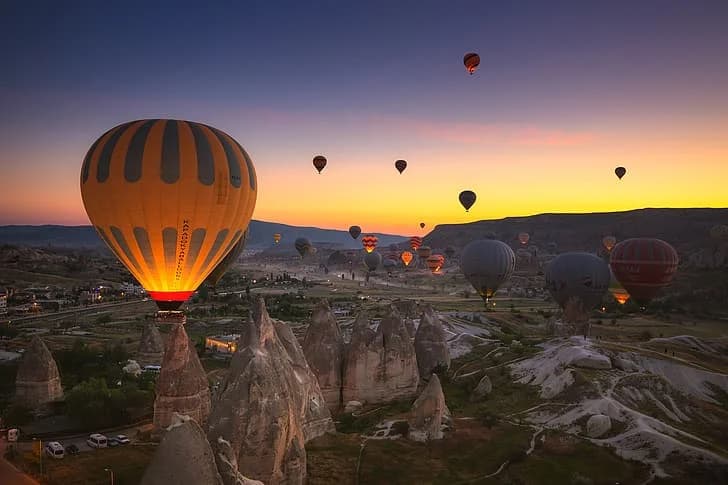
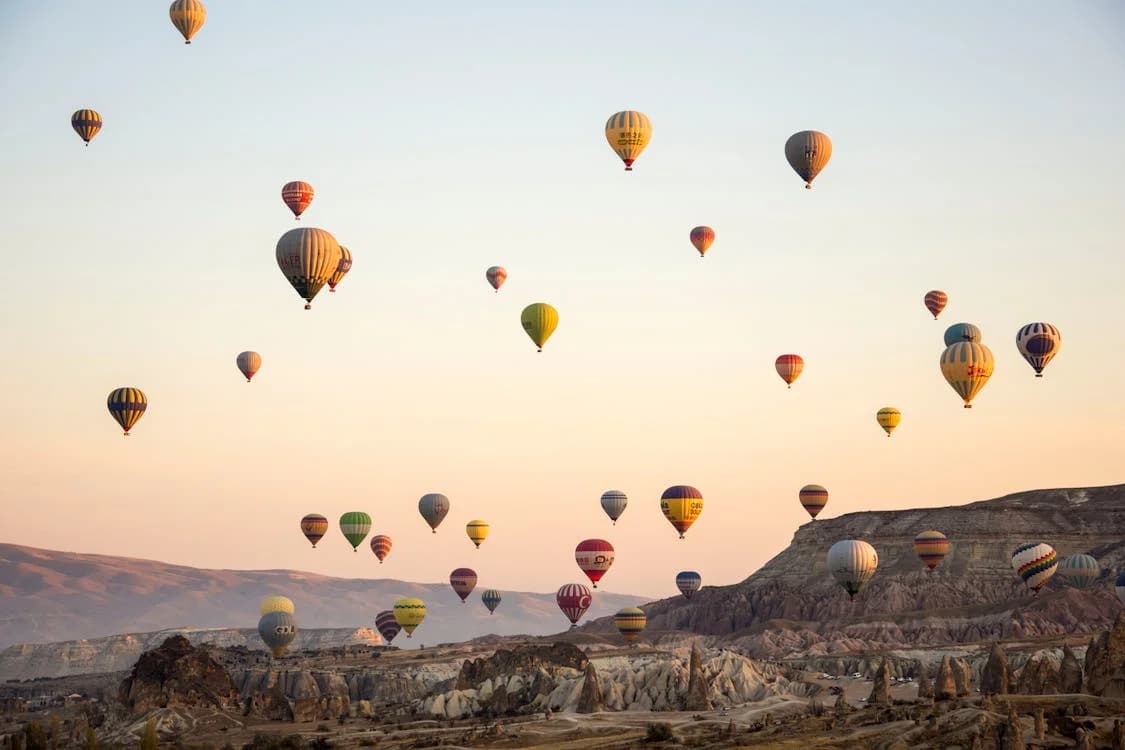
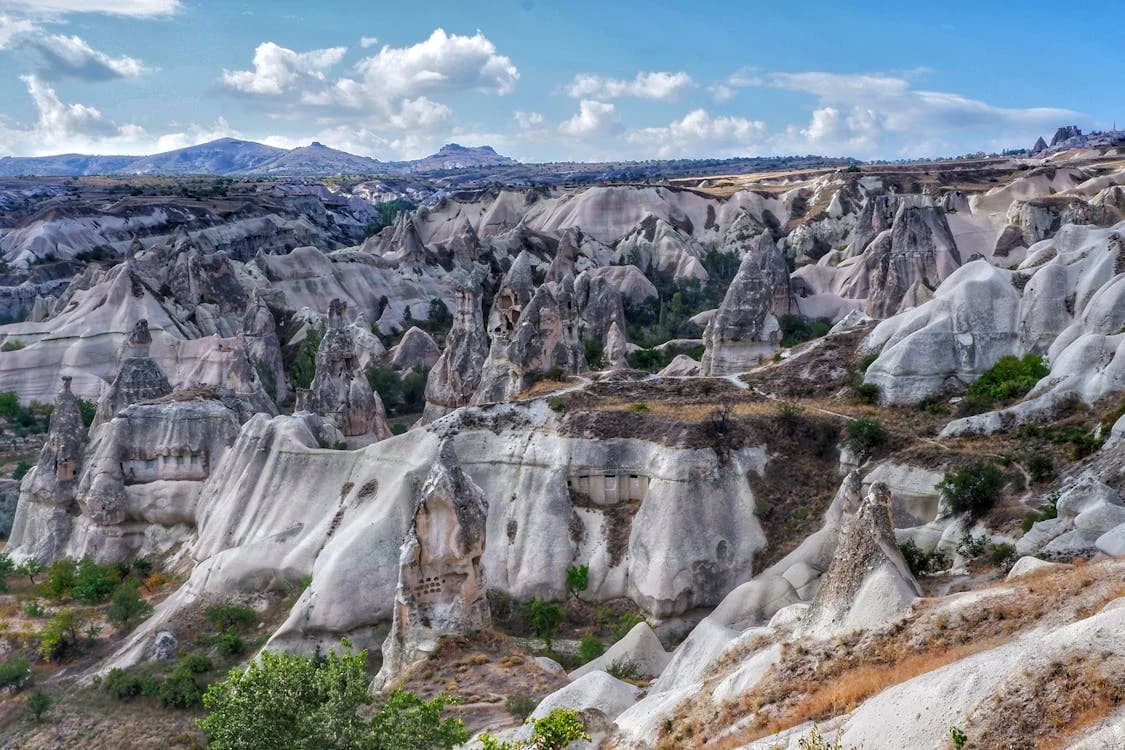
Cappadocia is famous for its fairy chimneys, cave churches, and hot air balloons — but beneath the surreal landscape lies something even more extraordinary. The region contains over 200 underground cities carved into the soft volcanic tuff, some descending eight levels deep and capable of sheltering tens of thousands of people.
Derinkuyu Underground City
Derinkuyu is the deepest explored underground city in Cappadocia, descending approximately 85 meters (280 feet) across eight floors. It could shelter up to 20,000 people along with their livestock and food stores. The complex includes stables, wine presses, kitchens, chapels, ventilation shafts, wells, and massive stone doors that could be rolled shut from inside to seal off each level. These doors weigh up to 500 kg and could not be opened from the outside — an ingenious defense mechanism.
The city was likely begun by the Phrygians around the 8th-7th centuries BC and expanded significantly by early Christians hiding from Roman persecution and later from Arab raids in the 7th-8th centuries AD. Walking through the narrow tunnels and low-ceilinged chambers, you get a powerful sense of what it meant to survive underground for months at a time — entire communities retreating beneath the earth with their animals, grain, and religious life intact.
Kaymakli Underground City
Kaymakli is the widest underground city (as opposed to Derinkuyu's depth) and the most visited. Four of its eight floors are currently open to tourists. The layout feels more maze-like than Derinkuyu, with winding tunnels connecting rooms used as churches, storage, wineries, and communting spaces. Kaymakli and Derinkuyu are connected by an underground tunnel approximately 9 km long, though this passage is not open to tourists.
Pro tip: Visit Derinkuyu if you want the deepest, most dramatic experience; visit Kaymakli if you have claustrophobia concerns, as its passages are slightly wider. Both are included in our Cappadocia tour packages. Wear comfortable shoes with grip (the stone floors can be slippery) and bring a light jacket — temperatures underground are a constant 13-15 degrees Celsius year-round, refreshing in summer but chilly if you are in shorts.
The History Behind the Cities
Why did people carve entire cities underground? The Anatolian plateau was a corridor for invading armies for millennia. Unlike coastal cities that could build walls, the flat Cappadocian landscape offered no natural defense. The soft volcanic tuff, however, was easy to carve but hardened on exposure to air, creating durable chambers. Early Christians fleeing Roman persecution in the 2nd-4th centuries AD expanded existing Phrygian tunnels into the multi-level refuges we see today. Later, during the Arab-Byzantine wars of the 7th-10th centuries, entire villages would descend underground at the first sign of raiders, sealing themselves in for weeks or months. The underground cities had everything needed to sustain life: ventilation, water, food storage, and even schools and churches.
Lycian Way & Ancient Lycia
The Lycian Way (Likya Yolu) is a 540-km marked hiking trail along Turkey's southwestern Mediterranean coast, rated by the Sunday Times as one of the world's ten best long-distance walks. But you do not need to hike the whole thing to experience the extraordinary historical sites along its route. The Lycian civilization (c. 1250-546 BC, then under Persian, Greek, and Roman rule) left behind some of the most haunting ruins in Turkey — cliff-cut rock tombs, ancient harbor cities, and remote temples perched above turquoise bays.
Xanthos
Xanthos, the capital of ancient Lycia, is a UNESCO World Heritage Site known for its unique pillar tombs and the Nereid Monument (the original is in the British Museum). The Lycians famously chose mass suicide over surrender — twice — first against the Persians in 545 BC and again against Brutus's Roman forces in 42 BC. The site is partially excavated and wonderfully atmospheric, with Lycian inscriptions still visible on tomb faces.
Patara
Patara was Lycia's principal port and the birthplace of St. Nicholas — the historical figure behind Santa Claus. The site includes a monumental triple-arched gate, a bouleuterion (parliament building) where the Lycian League met (considered the world's first democratic federation), and a Roman lighthouse. Just below the ruins stretches Patara Beach — 18 km of unbroken sand, one of Turkey's finest beaches and a nesting ground for endangered loggerhead sea turtles (Caretta caretta).
Myra & the Church of St. Nicholas
The ancient city of Myra (modern Demre) features spectacular Lycian rock-cut tombs carved high into a cliff face — their temple-like facades with carved reliefs are the most photogenic examples of Lycian funerary architecture. Below the tombs, a large Roman theater sits remarkably intact.
In the town of Demre, the Church of St. Nicholas marks the site where the historical St. Nicholas served as bishop in the 4th century AD. This is the real Santa Claus — a Greek Christian bishop known for his generosity to the poor. The church contains his original sarcophagus (his bones were controversially taken to Bari, Italy in 1087) and fragments of Byzantine floor mosaics. Ongoing excavations have revealed additional chambers beneath the church.
Pro tip: The Lycian coast is best visited between April and June or September and November. Summer is brutally hot for hiking but fine for beach-and-ruin combinations. Our daily tours from Antalya, Kas, and Fethiye cover the major Lycian sites without requiring multi-day hiking.
Gallipoli & WWI History
The Gallipoli Peninsula (Gelibolu) is one of the most emotionally powerful historical sites in Turkey — and indeed in the world. In 1915, during World War I, Allied forces (primarily Australian, New Zealand, British, and French troops) attempted an amphibious invasion of the peninsula to knock the Ottoman Empire out of the war and open a sea route to Russia through the Dardanelles. The campaign ended in failure for the Allies after eight months of brutal trench warfare that killed approximately 130,000 soldiers on both sides.
ANZAC Cove
ANZAC Cove (Anzak Koyu) is where Australian and New Zealand Army Corps troops landed on April 25, 1915 — a date now commemorated as ANZAC Day, the most significant national day of remembrance in Australia and New Zealand. The narrow beach, hemmed in by steep cliffs, makes it immediately apparent why the landing was so costly. The Allies were supposed to land on a wider beach further south but strong currents carried them here, directly beneath Ottoman defensive positions.
Above the cove, the Lone Pine memorial and cemetery mark the site of a fierce three-day battle. The Chunuk Bair memorial commemorates the New Zealand troops who briefly captured this strategic height before being pushed back. The Nek — a narrow ridge where Australian light horsemen charged into machine-gun fire — was immortalized in Peter Weir's 1981 film "Gallipoli."
Turkish Perspective
Gallipoli is equally sacred to Turks. The defense was commanded by Mustafa Kemal (later Ataturk), then a lieutenant colonel, whose leadership at critical moments turned the battle. His famous order to his troops — "I do not order you to attack, I order you to die" — is inscribed at the Chunuk Bair monument. At the 57th Regiment Memorial (57. Alay Aniti), an entire Ottoman regiment was wiped out in a single counterattack. The nearby Canakkale Martyrs' Memorial (Abide) stands 41 meters tall and is visible from across the strait.
One of the most remarkable things about Gallipoli is the spirit of reconciliation. Ataturk's 1934 tribute to the fallen ANZAC soldiers — "You, the mothers who sent their sons from faraway countries, wipe away your tears; your sons are now lying in our bosom and are in peace" — is inscribed at ANZAC Cove and has become one of the most quoted passages in Australian history.
Visiting Tips
The Gallipoli battlefields and cemeteries are spread across a wide area. A guided tour is strongly recommended — without context, many sites are just quiet fields and headstones. The most poignant visits are those where a knowledgeable guide tells the stories of individual soldiers. April 25 (ANZAC Day) draws thousands of Australians and New Zealanders for a dawn service at ANZAC Cove. Book accommodation in Canakkale or Eceabat well in advance if you plan to attend.
Pro tip: Do not rush Gallipoli. A full-day tour covering both the ANZAC and Turkish sectors, Cape Helles, and the Canakkale naval defenses provides the most complete picture. Our Gallipoli packages include bilingual guides who present both Allied and Turkish perspectives with equal depth and sensitivity.
Modern Turkey
Turkey's modern history begins with the collapse of the Ottoman Empire after World War I and the extraordinary transformation led by Mustafa Kemal Ataturk (1881-1938). Understanding this period is essential context for everything you see in Turkey today.
Ataturk's Reforms
After leading the successful War of Independence (1919-1923) against occupying Allied forces and Greek armies, Ataturk founded the Republic of Turkey on October 29, 1923. His reforms were sweeping and unprecedented in the Islamic world: the caliphate was abolished, religious law replaced with European-style civil codes, women received the right to vote (1934 — before France or Italy), the Arabic script was replaced with the Latin alphabet, the fez was banned, and Western-style dress was encouraged. Love him or debate his methods, Ataturk single-handedly reshaped a society in a generation.
Ankara as Capital
Ataturk chose Ankara — then a small Anatolian town — as the new capital instead of Istanbul, deliberately breaking with Ottoman-era associations. Today Ankara is a modern city of over 5 million, and while it lacks Istanbul's touristic glamour, it has significant historical sites of its own.
Anitkabir (Ataturk's Mausoleum)
Anitkabir, Ataturk's mausoleum in Ankara, is one of Turkey's most visited monuments and an architectural statement in its own right. The ceremonial approach — a 262-meter Lion Road flanked by Hittite-style lion sculptures — leads to a massive stone hall housing Ataturk's sarcophagus. The on-site museum displays personal belongings, gifts from world leaders, and his extensive library. For Turks, visiting Anitkabir is both a patriotic pilgrimage and an emotional experience. For foreign visitors, it provides essential context for understanding why Ataturk's image appears in every shop, school, and government office across the country.
Entry is free. The changing of the guard ceremony at the main entrance is worth timing your visit around. The grounds also offer panoramic views of Ankara.
Major Historical Sites — Quick Reference Table
| Site | Period | Location | Must-See Highlight | Entrance Fee (approx) |
|---|---|---|---|---|
| Ephesus | Greek/Roman | Selcuk, Izmir | Library of Celsus, Terrace Houses | €40 |
| Troy | Bronze Age - Roman | Canakkale | Nine-layer excavation, museum | see muze.gov.tr |
| Pergamon | Hellenistic/Roman | Bergama, Izmir | Steepest ancient theater, Asclepion | see muze.gov.tr |
| Aphrodisias | Hellenistic/Roman | Geyre, Aydin | Stadium, Sebasteion sculptures | see muze.gov.tr |
| Hierapolis/Pamukkale | Hellenistic/Roman | Denizli | White terraces, Antique Pool | €30 |
| Hagia Sophia | Byzantine/Ottoman | Istanbul | Dome, Deesis Mosaic | ~25 EUR (~$27) |
| Chora Church | Byzantine | Istanbul | Anastasis fresco, mosaic cycle | Free (mosque) |
| Basilica Cistern | Byzantine | Istanbul | Medusa heads, 336 columns | €38 |
| Topkapi Palace | Ottoman | Istanbul | Harem, Treasury, Bosphorus views | €54 (2,750 TL combined) |
| Dolmabahce Palace | Late Ottoman | Istanbul | Crystal chandelier, Ataturk's room | 2,000 TL (~€40) |
| Selimiye Mosque | Ottoman | Edirne | Sinan's masterpiece dome | Free |
| Derinkuyu | Phrygian/Byzantine | Cappadocia | 8-level underground city | see muze.gov.tr |
| Myra & St. Nicholas | Lycian/Byzantine | Demre, Antalya | Rock tombs, Santa Claus church | see muze.gov.tr |
| Gallipoli | WWI (1915) | Canakkale | ANZAC Cove, Lone Pine cemetery | Free |
| Anitkabir | Modern Republic | Ankara | Ataturk's mausoleum, museum | Free |
Note on prices: Entrance fees in Turkey change frequently and have been rising with inflation. The figures above are approximate for 2026. The Museum Pass Turkey (discussed below) covers many of these sites and offers significant savings if you plan to visit three or more.
Best Historical Tours & Itineraries
Turkey is large, and historical sites are spread across the country. Here are three suggested multi-day itineraries for history-focused travelers, each tested and refined through our years of operating guided tours.
Route 1: Classical Antiquity (7 Days)
Best for: Ancient history enthusiasts, Greek and Roman archaeology fans
- Day 1-2: Istanbul — Hagia Sophia, Basilica Cistern, Hippodrome, Archaeological Museum. Focus on Byzantine and early history.
- Day 3: Troy & Canakkale — Drive or fly to Canakkale. Visit Troy and museum. Evening stroll along the Dardanelles waterfront.
- Day 4: Pergamon — Drive south to Bergama. Cable car to Acropolis, walk through Asclepion. Continue to Selcuk area.
- Day 5: Ephesus — Full day at Ephesus including Terrace Houses, Church of St. John, Isabey Mosque. Visit Ephesus Museum in Selcuk.
- Day 6: Aphrodisias — Drive inland to Aphrodisias for a leisurely half-day. Continue to Pamukkale for evening arrival and sunset on the terraces.
- Day 7: Hierapolis & Pamukkale — Morning at Hierapolis ruins and Antique Pool. Afternoon departure from Denizli airport or drive back to Izmir.
Route 2: Empires of Istanbul & Beyond (5 Days)
Best for: Byzantine and Ottoman history buffs, architecture lovers
- Day 1: Byzantine Istanbul — Hagia Sophia, Chora Church, Basilica Cistern, Theodosius Cistern, city walls walk from Yedikule to Edirnekapi.
- Day 2: Ottoman Istanbul — Topkapi Palace (with Harem), Suleymaniye Mosque, Grand Bazaar, Turkish & Islamic Arts Museum.
- Day 3: Bosphorus & Late Ottoman — Dolmabahce Palace, Bosphorus cruise, Beylerbeyi Palace on Asian side, Rumeli Fortress.
- Day 4: Edirne — Day trip to Edirne. Selimiye Mosque, Old Mosque, Turkish Islamic calligraphy at the museum, traditional Edirne liver lunch.
- Day 5: Gallipoli & Troy — Early departure to Gallipoli. Full battlefield tour. Cross the Dardanelles. Afternoon at Troy. Return to Istanbul or continue onward.
Route 3: Anatolia Deep Dive (10 Days)
Best for: Comprehensive history coverage, off-the-beaten-path explorers
- Day 1-2: Istanbul — Major Byzantine and Ottoman sites.
- Day 3: Ankara — Fly to Ankara. Anitkabir, Museum of Anatolian Civilizations (world-class collection of Hittite, Phrygian, and Urartian artifacts).
- Day 4: Hattusa — Drive to Bogazkale. Hittite capital Hattusa, Lion Gate, Great Temple, Yazilikaya rock sanctuary. This is Turkey's most important Bronze Age site.
- Day 5-6: Cappadocia — Drive to Cappadocia. Hot air balloon at dawn. Goreme Open-Air Museum (rock-cut churches with Byzantine frescoes). Derinkuyu underground city. Uchisar castle.
- Day 7: Konya — Drive to Konya. Mevlana Museum (tomb of Rumi, the Sufi poet). Seljuk-era mosques and madrasas. Catalhoyuk (the Neolithic site, if open for visits).
- Day 8: Pamukkale & Aphrodisias — Drive to Pamukkale. Hierapolis and terraces. Afternoon at Aphrodisias.
- Day 9: Ephesus — Full day at Ephesus and Selcuk.
- Day 10: Pergamon & Departure — Morning at Pergamon. Afternoon flight from Izmir.
Pro tip: All three routes are available as organized Funny Tourism packages with professional historian guides, comfortable transportation, and skip-the-line access at major sites. Self-driving is possible but having a guide who can contextualize what you are seeing transforms ruins into vivid stories.
Tips for History Lovers
Museum Pass Turkey
The Museum Pass Turkey costs approximately €165 and provides 15 days of access to over 300 museums and archaeological sites across the country, including Ephesus, Topkapi Palace, Hagia Sophia, Hierapolis, Troy, and Pergamon. If you plan to visit more than three major paid sites, the pass pays for itself. It also gives you skip-the-line access at most sites — a significant benefit at popular places like Topkapi and Ephesus where ticket queues can exceed 30 minutes in peak season. Purchase it online or at any participating museum.
Guided Tours vs. Self-Guided
For sites like Ephesus, Troy, and Gallipoli, a guided tour makes a dramatic difference. A pile of stones becomes the library that preserved Western knowledge; a quiet field becomes a battlefield where the fate of nations was decided. Good guides bring historical imagination, local knowledge, and storytelling skills that no audio guide or signboard can match. For architectural sites like mosques and palaces in Istanbul, self-guided visits work well since the visual impact speaks for itself — though a guide still adds depth. Our daily tours use professional historian guides, not generic tourism guides.
Best Times to Visit Historical Sites
- Spring (April-May): Ideal. Comfortable temperatures, wildflowers at outdoor sites, moderate crowds. Ephesus and Pamukkale are at their best. Gallipoli is especially poignant around ANZAC Day (April 25).
- Early Fall (September-October): Equally good. Summer crowds thin out, temperatures drop to pleasant levels, and the Mediterranean light is golden and perfect for photography.
- Summer (June-August): Hot, especially at exposed sites like Ephesus, Pergamon, and Hierapolis (expect 35-40 degrees). Visit early morning or late afternoon. Istanbul is busy but manageable. Cappadocia's high altitude keeps it slightly cooler.
- Winter (November-March): Istanbul's mosques and palaces are crowd-free and atmospheric in rain. Cappadocia under snow is magical. Coastal sites like Ephesus and Lycian ruins are pleasant even in December. Many outdoor sites close earlier (4 or 5 PM).
Best History Museums
Do not skip the museums — many of Turkey's most important artifacts are in museum collections rather than on-site:
- Istanbul Archaeological Museums — Three museums in one complex near Topkapi. The Alexander Sarcophagus, Treaty of Kadesh tablet, and ancient Near Eastern collections are world-class.
- Museum of Anatolian Civilizations (Ankara) — The best single museum for understanding Turkey's pre-Greek history: Hittite, Phrygian, Urartian artifacts in a beautifully restored Ottoman bazaar building.
- Ephesus Museum (Selcuk) — Small but excellent collection of artifacts from the Ephesus excavations, including the multi-breasted Artemis statues.
- Antalya Museum — Outstanding collection of statues and sarcophagi from the Lycian and Pamphylian coast, with galleries spanning from prehistory to the Ottoman period.
- Gaziantep Zeugma Mosaic Museum — The world's largest mosaic museum, featuring stunning Roman floor mosaics rescued from the ancient city of Zeugma before it was flooded by a dam. The "Gypsy Girl" mosaic is Turkey's Mona Lisa.
Photography Tips
Most historical sites in Turkey allow photography without tripods. Drone photography requires a permit and is banned at military-sensitive sites (including Gallipoli). For the best light at outdoor ruins, shoot in the first two hours after sunrise or the last two hours before sunset. Mosques allow photography but never photograph people praying without permission. Flash photography is prohibited in museums and at Byzantine mosaics/frescoes.
Pro tip: Download offline maps of archaeological sites before visiting. Cell service can be spotty at rural sites like Aphrodisias, Hattusa, and Xanthos. The Funny Tourism blog has detailed guides for each destination with downloadable maps and itineraries.
Frequently Asked Questions
How many days do I need to see Turkey's major historical sites?
A minimum of 7-10 days covers the highlights: 3 days in Istanbul (Byzantine + Ottoman), 2 days for Ephesus and the Aegean coast, 2 days in Cappadocia, and optional 1-2 days for Gallipoli/Troy or the Lycian coast. Our 10-day Anatolia Deep Dive itinerary (above) is the most comprehensive option. If you only have 5 days, focus on Istanbul and Ephesus — the highest density of major sites.
Is the Museum Pass Turkey worth buying?
Yes, if you plan to visit three or more paid archaeological sites or museums. At €165, the pass covers Ephesus (€40), Hierapolis (€30), Topkapi Palace and dozens more (note: Hagia Sophia and Basilica Cistern are NOT included). It pays for itself within 2-3 sites and saves time with skip-the-line access. Valid for 15 days from first use. Note: it does not cover everything (Dolmabahce Palace and some Harem entries are separate).
Are guided tours really necessary for ancient sites?
Not strictly necessary, but highly recommended for sites like Ephesus, Troy, Gallipoli, and Cappadocia's underground cities. Without a guide, Troy in particular looks like random stone walls. A knowledgeable guide turns a 45-minute confused walk into a 2-hour immersive experience. For mosques and palaces in Istanbul, self-guided visits are fine since the architecture is visually self-explanatory. Our tour packages include professional historian guides at all major sites.
Can I visit mosques as a non-Muslim tourist?
Absolutely. Turkey's mosques are open to visitors of all faiths. Dress modestly (cover shoulders and legs; women cover hair), remove shoes at the entrance, avoid visiting during the five daily prayer times (each lasts about 20-30 minutes), and do not walk in front of people who are praying. Free headscarves and shoe bags are available at major mosques like the Blue Mosque and Suleymaniye. Photography is generally permitted but turn off your flash and be discreet.
What is the best time of year to visit for historical sightseeing?
April-May and September-October are ideal: warm but not oppressively hot, fewer crowds than summer, longer daylight hours than winter. Avoid July and August for outdoor archaeological sites unless you are prepared for 35-40 degree heat. Istanbul is a year-round destination — even rainy winter days have a moody charm in the mosques and palaces.
How do I get between historical sites?
Turkey has an extensive domestic flight network (Turkish Airlines and budget carriers like Pegasus) connecting Istanbul to Izmir (for Ephesus/Pergamon), Denizli (for Pamukkale), Kayseri/Nevsehir (for Cappadocia), and Canakkale (for Troy/Gallipoli). Intercity buses are comfortable and affordable. Self-driving is possible but not recommended in Istanbul. Our tour packages include all intercity transportation, and we offer private transfers between individual sites.
Is Turkey safe for tourists?
Yes. Turkey welcomes over 50 million tourists annually and is one of the world's most visited countries. The major tourist areas — Istanbul, Cappadocia, Aegean and Mediterranean coasts, Ankara — are safe and well-policed. Petty theft (pickpocketing in crowded areas) exists as in any major tourist destination but violent crime against tourists is rare. Turks are famously hospitable and helpful to visitors. Travel insurance is always recommended.
What should I read before visiting Turkey's historical sites?
For general background: "A Short History of Byzantium" by John Julius Norwich is accessible and entertaining. For Ottoman history, "Osman's Dream" by Caroline Finkel is the definitive English-language account. For ancient sites, "The Histories" by Herodotus (who was born in what is now Bodrum) is the original travel writing. For Gallipoli specifically, "Gallipoli" by Les Carlyon is the standard reference. And of course, Homer's "Iliad" before visiting Troy.
Walk Through 10,000 Years of History
Our expert-guided tours bring Turkey's incredible history to life.
Professional historian guides • Skip-the-line access • All entrance fees included • Small groups
Explore History Tours →Trusted by thousands of travelers since 2010
📚 Continue Reading: More Turkey Guides
Explore our comprehensive travel guide series to plan the perfect Turkey trip: