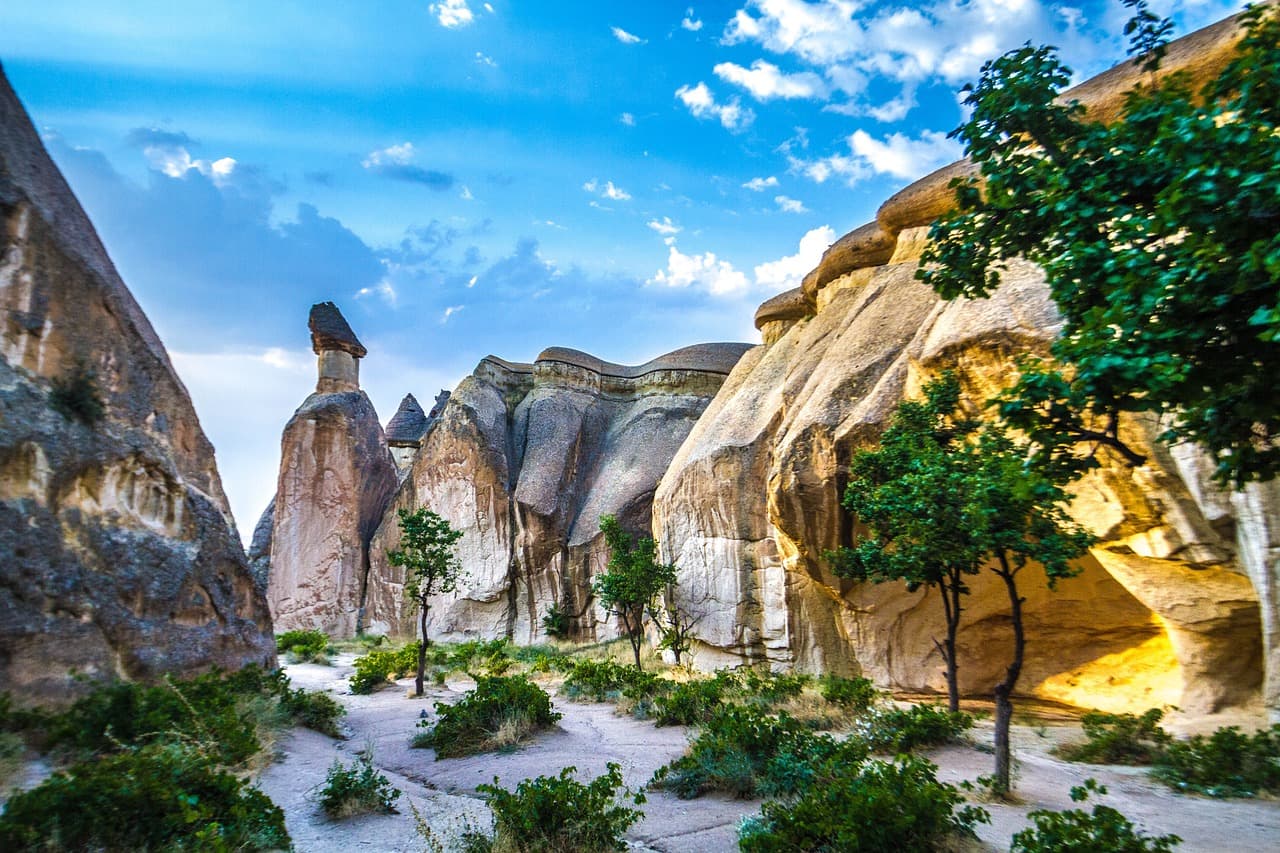
Turkey is not just a destination — it is an adventure playground stretching across two continents with landscapes that shift from lunar valleys and snow-capped volcanoes to turquoise coastlines and ancient forest trails. Whether you want to float silently over fairy chimneys at sunrise, paraglide from 1,960 metres above the Mediterranean, scrub centuries of tradition into your skin at a marble hamam, or trek one of the world's top long-distance trails, Turkey delivers experiences you simply cannot replicate anywhere else.
In this comprehensive guide we cover every major activity and adventure available across Turkey in 2026 — complete with honest pricing, best seasons, insider tips, and practical advice from our team who have been organising these experiences since 2010. If you are looking for full tour packages that bundle several activities together, check our main catalogue. For single-day experiences, browse our daily tours page.
Ready? Let us dive in.
Hot Air Balloon Rides in Cappadocia
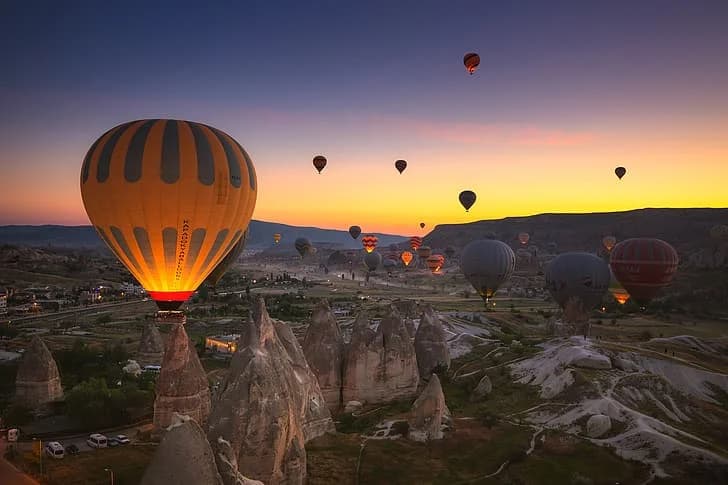
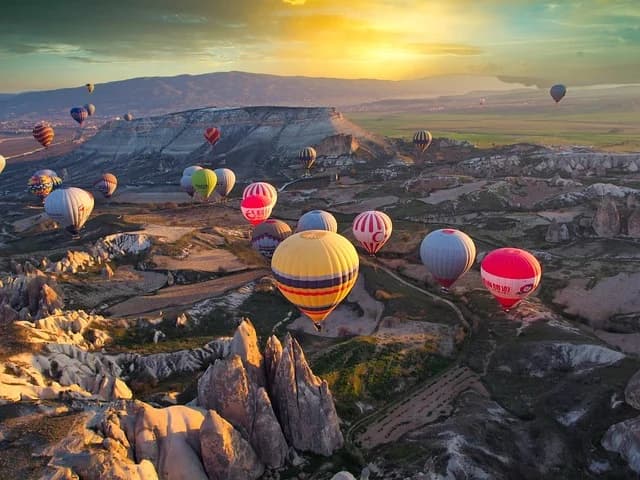
There is a reason this is on almost every traveller's bucket list. Floating above Cappadocia's fairy chimneys, carved valleys, and patchwork fields at sunrise is genuinely one of the most extraordinary experiences on the planet. On a clear morning, up to 150 balloons lift off simultaneously, painting the sky in a mosaic of colour while the Anatolian sun breaks over the horizon.
What to Expect
Your morning begins early — most operators pick you up from your hotel between 04:30 and 05:30 depending on the season. You will be driven to the launch site near Goreme where ground crews are already inflating the envelopes. After a brief safety briefing, you climb into the wicker basket (typically holding 12–24 passengers in compartments) and the pilot fires the burner. The ascent is gentle and almost silent between burns. Flights last approximately 60 to 90 minutes, during which you drift over Love Valley, Pigeon Valley, Rose Valley, and the town of Goreme itself. The pilot will vary altitude — sometimes skimming just above the fairy chimneys, other times climbing to 300 metres for panoramic views. After landing, most companies serve a small champagne or juice celebration and present you with a flight certificate.
Best Time to Fly
The balloon season runs roughly from late March through November, with the absolute peak being April to June and September to October. These shoulder months offer the clearest skies, calmest winds, and most comfortable temperatures. July and August flights are also available but morning temperatures are already warm and haze can reduce visibility. Winter flights (December–February) do operate on suitable days, and the landscape dusted in snow is magical, but cancellation rates are significantly higher — around 40–60% of scheduled flights get grounded due to wind or snow.
Pricing (2026)
Balloon ride prices in Cappadocia vary based on the operator and basket size:
- Standard flight (16–24 person basket): €150–€200 per person
- Comfort flight (12–16 person basket): €200–€280 per person
- Deluxe/VIP flight (8–12 person basket): €280–€350 per person
- Private flight (2–4 person basket): €800–€1,500 total
All prices include hotel pickup and drop-off, the flight itself, insurance, and the post-flight celebration. Booking through Funny Tourism often includes bundled discounts when combined with other Cappadocia activities.
Licensed Operators
Turkey's Civil Aviation Authority (SHGM) licenses all balloon companies. As of 2026, around 25 licensed operators fly from the Cappadocia region. Some of the most established names include Royal Balloon, Butterfly Balloons, Voyager Balloons, Turkiye Balloons, and Kapadokya Balloons. We only work with fully licensed operators who carry mandatory insurance and whose pilots have a minimum of 500 flight hours.
Tips for Photographers
Cappadocia balloon flights are a photographer's dream, but the conditions demand some preparation:
- Bring a wide-angle lens (16–35mm equivalent) for capturing the balloon-filled sky alongside the landscape below. A telephoto (70–200mm) is useful for isolating individual balloons against valley textures.
- Shoot in burst mode during the first 15 minutes after launch — this is when balloons are closest together and at varying altitudes, creating the most dramatic compositions.
- Use a fast shutter speed (1/500s or faster) if shooting from inside the basket, as the burner firing creates vibration.
- Golden hour is automatic — you are airborne during sunrise, so the light is already perfect. Slightly underexpose by 1/3 stop to preserve the warm tones.
- Bring a GoPro or action camera for time-lapse footage. Mount it on the basket edge (with a secure tether) for hands-free recording while you enjoy the moment.
- Protect your gear — mornings can be chilly (5–10°C in spring/autumn) and condensation on lenses is common. Bring a microfibre cloth and keep spare batteries warm in your pocket.
Weather Cancellation Policy
Balloon flights are entirely weather-dependent. The Civil Aviation Authority monitors conditions in real-time and can ground all flights as late as 15 minutes before scheduled launch. Common cancellation reasons include wind speeds above 10 knots at ground level, low cloud cover, rain, or fog. If your flight is cancelled:
- Rebooking: Most operators will reschedule you to the next available morning at no extra cost. If you have consecutive mornings available, your chances of flying at least once are above 90% in peak season.
- Full refund: If rebooking is not possible (e.g., you are leaving that day), reputable operators and Funny Tourism provide a full refund within 7–14 business days.
- No partial flights: If conditions deteriorate mid-flight and the pilot must land early, you still receive the full experience — pilots are trained to ensure a safe and scenic abbreviated route.
Pro tip: Book your balloon flight for the first morning of a multi-day Cappadocia stay. That way, if weather cancels your flight, you have backup mornings. We see too many travellers book their last morning and miss out entirely when winds pick up.
Paragliding in Oludeniz (Fethiye)
Oludeniz — the famous Blue Lagoon on Turkey's southwest coast — is consistently ranked among the top three tandem paragliding destinations in the world, alongside Interlaken (Switzerland) and Pokhara (Nepal). The combination of Babadag Mountain's 1,960-metre launch altitude, the stunning turquoise lagoon below, and remarkably reliable thermal conditions creates a paragliding experience that is hard to beat at any price.
The Babadag Mountain Experience
Your adventure starts with a minibus ride from Oludeniz beach up the winding mountain road to one of three launch platforms on Babadag (Mount Baba). The standard launch is at 1,700 metres, while the summit launch at 1,960 metres adds extra flight time and even more dramatic views. The drive takes about 30 minutes, and the views on the way up are already spectacular.
At the launch platform, you meet your tandem pilot — all licensed by the Turkish Aeronautical Association (THK). After being strapped into the harness, you take a short run downhill (3–5 steps) and you are airborne. There is no jumping off a cliff — the takeoff is smooth and natural. Within seconds, the ground drops away and you are soaring above pine forests with the entire Fethiye coastline spreading out beneath you.
Flights typically last 25–45 minutes depending on thermal conditions and the launch altitude. Your pilot will catch thermals to gain altitude, perform gentle turns over the lagoon, and — if you request it — execute acrobatic manoeuvres like wing-overs, spirals, and speed bars. (Let your pilot know in advance if you want the calm scenic version.) The landing is on Oludeniz beach, right next to the lagoon.
Pricing (2026)
- Standard tandem flight (1,700m launch): €90–€120 per person
- Summit tandem flight (1,960m launch): €120–€160 per person
- GoPro video + photos package: €30–€50 additional
Most operators include the video/photo package in promotional pricing during off-peak months. When you book through Funny Tourism, the media package is typically included.
Best Months
Paragliding operates year-round in Oludeniz, but the prime season is April through November. The absolute best conditions are in May, June, September, and October — warm thermals, clear skies, and moderate winds produce longer flight times and the best photography conditions. July and August are busy and hot but conditions remain excellent. Winter flights are available on calm days but are less frequent.
What to Wear
- Closed-toe shoes — trainers or hiking shoes are ideal for the short run at launch. No sandals or flip-flops.
- Long trousers recommended — the harness straps can be uncomfortable on bare legs during landing.
- Sunglasses with a strap — essential at altitude. Your pilot may have a spare pair if you forget.
- Light jacket or fleece — it is noticeably cooler at 1,960 metres than at beach level, especially in spring and autumn. Expect temperatures 10–15°C lower than the beach.
- Leave valuables at your hotel — there is no secure storage at the launch site, and you do not want to worry about your phone slipping out of a pocket at 1,500 metres.
Pro tip: If you are prone to motion sickness, take a preventive tablet 30 minutes before the drive up. The winding mountain road causes more queasiness than the actual flight. Once airborne, most people feel perfectly fine — the movement is gentle and smooth.
Turkish Bath (Hamam) Experience
The Turkish bath (hamam) is not just a spa treatment — it is a 600-year-old Ottoman tradition that is woven into the social and cultural fabric of Turkey. Visiting a historic hamam is one of the most immersive cultural experiences you can have in Istanbul or anywhere in Turkey. It is also genuinely therapeutic — the combination of steam, hot marble, vigorous scrubbing, and foam massage leaves your skin feeling impossibly soft and your body completely relaxed.
Step-by-Step: What Happens in a Hamam
- Arrival and changing: You are given a pestemal (thin cotton wrap), wooden clogs, and shown to a changing cubicle. You undress and wrap the pestemal around yourself. Valuables go in a locker.
- Warm room (iliklik): You enter a heated room to begin acclimatising to the temperature. Spend 10–15 minutes here letting your pores open.
- Hot room (sicaklik): The main chamber, usually a stunning domed marble room with a heated central stone platform (gobektasi, literally "belly stone"). Lie on the hot marble and let the steam work on your muscles. The room temperature is typically 40–50°C with high humidity.
- Kese (exfoliation scrub): An attendant (tellak for men, natir for women) wearing a coarse mitt scrubs your entire body. This removes dead skin — you will be amazed (and mildly horrified) at the amount of skin that rolls off. The process takes about 10 minutes and leaves your skin tingling and pink.
- Foam massage (kopu masaji): After the scrub, the attendant fills a cloth bag with soapy lather and covers you in a mountain of foam. They then perform a thorough foam massage, working shoulders, back, arms, and legs. This lasts about 10–15 minutes and is deeply relaxing.
- Rinse: Warm water is poured over you from traditional copper bowls (tas), followed by progressively cooler water to close your pores.
- Cool-down room: You return to a rest area where you are offered tea, water, or sherbet. Many people doze off at this point — it is that relaxing.
Best Historic Hamams
Cagaloglu Hamam (Istanbul)
Built in 1741 under Sultan Mahmut I, Cagaloglu is arguably the most famous hamam in the world. It was the last great hamam commissioned during the Ottoman Empire and has been in continuous operation for nearly 300 years. The architecture is breathtaking — soaring domes, ornate marble, and light streaming through star-shaped glass openings. Located in Sultanahmet, it is convenient for tourists staying in the old city. A traditional bath experience here costs €50–€120 depending on the package (basic scrub + foam, or the full treatment with oil massage). Featured in National Geographic's "1,000 Places to See Before You Die."
Kilic Ali Pasa Hamam (Istanbul)
Designed by the legendary architect Mimar Sinan in 1580, this hamam in the Tophane neighbourhood was meticulously restored in 2012 and is now considered the finest hamam experience in Istanbul for those who want luxury without tourist-trap prices. The restoration preserved the original marble and dome while adding modern amenities. The service is exceptionally professional. A full treatment (scrub + foam + oil massage + tea) runs €80–€150. Advance booking is essential — this hamam limits numbers to ensure quality.
Hurrem Sultan Hamam (Istanbul)
Another Mimar Sinan masterpiece (1556), built on the orders of Hurrem Sultan (Roxelana), the famous wife of Suleiman the Magnificent. Located between Hagia Sophia and the Blue Mosque — literally the most prime real estate in Istanbul. The hamam was derelict for decades and reopened after a major renovation. It is the most expensive option (€100–€200+) but the setting is unmatched. The couples' bath option in the private section is popular for honeymoons.
Hamam Etiquette
- Nudity: Men typically wear the pestemal (wrap) throughout. Women can go nude in the women's section, though many choose to keep underwear on. Mixed/tourist hamams require the pestemal at all times.
- Tipping: A tip of 15–20% of the service cost for your attendant is customary and appreciated.
- Gender separation: Traditional hamams have separate sections for men and women, or alternate days. Tourist-focused hamams sometimes offer mixed bathing, but this is not traditional.
- Health: Avoid the hamam if you have a heart condition, very low blood pressure, or are pregnant without doctor approval. The heat is intense.
- Jewellery: Remove all jewellery before entering. The scrubbing mitt will scratch metals and the heat can make rings uncomfortable.
- Photography: Generally not permitted in bathing areas. You can photograph the entrance, rest areas, and architecture in some hamams with permission.
Pro tip: Do not shave or wax for at least 24 hours before your hamam visit. The kese scrub on freshly shaved skin is genuinely painful. Also, go on an empty stomach or eat only lightly — the heat and steam on a full stomach is not pleasant.
Boat Tours & Gulet Cruises
With 8,333 kilometres of coastline touching four seas (Black Sea, Sea of Marmara, Aegean, and Mediterranean), Turkey is a maritime paradise. From the iconic wooden gulets of the Turquoise Coast to the ferries crisscrossing the Bosphorus, there is a boat experience for every taste and budget.
The Blue Cruise (Mavi Yolculuk): Fethiye to Olympos
The classic Blue Cruise is a multi-day sailing trip along the Turquoise Coast aboard a traditional wooden gulet. The most popular route runs from Fethiye to Olympos (or the reverse) over 4 days and 3 nights. You sail through sheltered bays, swim in crystal-clear coves, explore ancient ruins accessible only by sea, and sleep on deck under a canopy of stars.
Key stops include Butterfly Valley (a steep-walled canyon with a waterfall), Oludeniz Blue Lagoon (from the water side), Gemiler Island (Byzantine church ruins), Kas (charming harbour town), and Kekova (sunken city). All meals are prepared on board by the crew, and the food is typically excellent — fresh fish, salads, grilled meats, and homemade desserts.
Pricing for a standard cabin on a shared gulet cruise ranges from €250–€450 per person for the 4-day trip, including all meals and fuel. Private gulet charters start from €2,000–€5,000 per day depending on the vessel size and season. Check our yacht charter page for current availability.
Bosphorus Cruises (Istanbul)
No visit to Istanbul is complete without a cruise on the Bosphorus Strait — the narrow waterway separating Europe and Asia. Options range from budget to luxurious:
- Public ferry (Sehir Hatlari full Bosphorus tour): €5–€10. Departs from Eminonu, sails to Anadolu Kavagi near the Black Sea entrance, waits 2–3 hours, returns. Total trip about 6 hours. Excellent value.
- Private short cruise (1.5–2 hours): €20–€40 per person in a group, or €150–€300 for a private boat. Covers the highlights — Dolmabahce Palace, Ortakoy Mosque, Rumeli Fortress, the two bridges.
- Sunset/dinner cruise: €50–€120 per person with dinner, drinks, and live entertainment. The city skyline lit up at night from the water is unforgettable.
- Luxury yacht charter: €500–€2,000 for a private yacht with captain, often including drinks and canapes. Popular for special occasions.
Kekova Sunken City Boat Tour
One of Turkey's most unique experiences. The ancient Lycian city of Simena (Kekova) was partially submerged by an earthquake in the 2nd century AD, and you can see the ruins — staircases, walls, house foundations — beneath the clear shallow water from your boat. The standard boat tour from Ucagiz or Kas lasts about 4 hours and includes stops at Kekova Island, Simena Castle (with its tiny ancient amphitheatre), and swimming in secluded bays. Expect to pay €25–€50 per person on a shared boat, or €200–€400 for a private boat.
Note: swimming directly over the sunken city ruins is prohibited (it is a protected archaeological site), but there are designated swimming areas very nearby with excellent snorkelling.
Pro tip: For the Blue Cruise, book a cabin charter rather than a whole boat if you are a couple or solo traveller. You will share the gulet with other travellers (usually 8–16 people) but at a fraction of the cost. The social aspect is often a highlight — many lifelong friendships start on Blue Cruises.
Hiking & Trekking
Turkey's dramatic topography — from Mediterranean coastal cliffs to high-altitude volcanic plateaux — makes it one of the most diverse hiking destinations in the world. The country has several internationally recognised long-distance trails and countless shorter routes through valleys, canyons, and mountain passes.
The Lycian Way
The Lycian Way is a 540-kilometre waymarked trail running along Turkey's southwest Mediterranean coast from Fethiye to Antalya. Named one of the world's top 10 long-distance walks by the Sunday Times, it follows ancient Lycian roads, Roman paths, and Ottoman mule tracks through some of the most spectacular coastal scenery in the Mediterranean.
The trail passes through ancient ruins (Xanthos, Patara, Olympos, Phaselis), over mountain passes reaching 1,800 metres, along cliff-edge paths with vertigo-inducing sea views, and through tiny villages where you can stay in family-run pensions. The full trail takes 25–30 days to complete, but most hikers tackle sections:
- Fethiye to Butterfly Valley (2–3 days): Dramatic start with steep descents to hidden beaches.
- Kas to Ucagiz/Kekova (3–4 days): Ancient Lycian tombs, Simena castle, swimming in pristine bays.
- Olympos to Phaselis (2 days): Walk through the ancient ruined city of Olympos, see the eternal flames of Chimaera (natural gas seeps burning from the rock), and end at the Roman port of Phaselis surrounded by pine forest.
- Ovacik to Oludeniz (1 day): A shorter walk ending at the famous Blue Lagoon — perfect as a warm-up or a standalone day hike.
The best months for the Lycian Way are March to May and September to November. Summer is far too hot for long-distance hiking on the exposed coastal sections. Wildflowers in spring are exceptional.
Cappadocia Valleys
Cappadocia is famous for balloons, but the valley hikes are equally rewarding and far less crowded. The terrain is utterly surreal — eroded tuff formations in every shade of pink, orange, and cream, dotted with cave churches, pigeon houses carved into cliffs, and secret passages.
- Love Valley: 3 km (1–2 hours). Famous for its tall, phallic-shaped fairy chimneys. The trail winds between towering pillars of rock — an otherworldly landscape that is excellent for photography. Starts near Uchisar.
- Rose Valley to Red Valley: 5 km (2–3 hours). A stunning route through pink and red rock formations with cave churches containing 8th–11th century frescoes. The sunset from Rose Valley is one of Cappadocia's top experiences.
- Ihlara Valley: 14 km (4–6 hours for the full route). A deep, lush canyon carved by the Melendiz River, with over 100 rock-cut churches dating from the 7th to 14th centuries. The contrast between the green valley floor with its poplar trees and river, and the sheer canyon walls is dramatic. You can walk a shorter 4 km section starting from the famous wooden staircase (360 steps descending into the canyon) to Belisirma village, where riverside restaurants serve fresh trout.
- Pigeon Valley: 4 km (1.5–2 hours). Connects Uchisar to Goreme, named for the thousands of pigeon houses carved into the rocks (pigeons were kept for their guano, used as fertiliser). Views of Uchisar Castle and the Erciyes volcano are superb.
Mount Ararat (Agri Dagi)
Turkey's highest peak at 5,137 metres, Mount Ararat is a serious mountaineering expedition rather than a hike. The standard route takes 4–5 days from the base camp near Dogubayazit, including acclimatisation days. You need a special permit (arranged through licensed agencies), a certified mountain guide, and proper gear for glacier conditions above 4,200 metres. The summit is permanently snowcapped and the final push involves crampons and ice axes. The climbing season is July to September. Guided expeditions cost €1,500–€3,000 per person including permits, gear, porters, and food.
Kackar Mountains
The Kackar range in Turkey's northeast Black Sea region is a paradise for experienced trekkers. Reaching 3,937 metres at Kackar Dagi, the range features glacial lakes, alpine meadows, dense old-growth forests, and isolated yayla (highland pasture) villages where semi-nomadic families still spend summers. Multi-day treks cross passes above 3,000 metres with stunning views of the Black Sea coast. The trekking season is June to September. This area is far off the tourist trail — you might hike for days seeing only shepherds and their flocks.
Pro tip: For the Lycian Way, invest in a copy of Kate Clow's guidebook "The Lycian Way" — she created and waymarked the trail, and the book includes detailed GPS coordinates, elevation profiles, and accommodation options for every section. Also download the trail GPX files to your phone as a backup, because some sections have faded waymarks.
Scuba Diving & Snorkeling
Turkey's Mediterranean and Aegean coasts offer surprisingly excellent diving with clear water, interesting underwater topography, and a mix of marine life and ancient wrecks. Water temperatures range from 16°C in winter to 28°C in summer, and visibility regularly reaches 20–30 metres in the best locations.
Kas
The undisputed diving capital of Turkey. This small Mediterranean town near the Lycian coast has over 30 mapped dive sites within easy boat range, including canyons, caves, walls, and wrecks. Highlights include the Canyon dive (a narrow underwater canyon starting at 8m depth with walls covered in sponges and gorgonians), the Italian WWII plane wreck at 60m (for technical divers), and the Uluburun replica reef. The town has a dozen dive centres, all well-equipped and professionally run. Expect to pay €40–€60 for a two-dive day trip, or €250–€350 for a PADI Open Water certification course.
Bodrum
The Bodrum peninsula offers excellent wreck diving. The most famous site is the Pinar 1 cargo ship wreck (sunk in 1980 at 30m depth), which has become an artificial reef teeming with grouper, barracuda, and moray eels. Other popular sites include the Black Island caves (spectacular light effects as sunlight enters through cracks) and Karaada hot spring (you can dive near underwater thermal vents). Two-dive day trips cost €50–€70 per person.
Fethiye
The waters around Fethiye and the Twelve Islands offer relaxed diving suitable for beginners. Afkule Monastery wall dive is popular for its dramatic underwater cliff face, while Aquarium Bay lives up to its name with exceptional visibility (often 30m+) and colourful fish life. Fethiye is also one of the most affordable diving locations in Turkey — two-dive day trips start from €35–€50.
Antalya
Antalya's diving centres focus on the waters between the old city and Kemer. The Suluada Island (Turkish Maldives) area has turquoise water and rocky reefs, while the Three Islands site near Kemer features underwater caves and tunnels. The Paris wreck — a French cargo ship from the 1920s at 25m depth — is the most popular wreck dive. Pricing is similar to Fethiye at €35–€55 for two dives.
Pro tip: If you are not a certified diver, almost every dive centre in Turkey offers Discover Scuba Diving (DSD) experiences — a pool briefing followed by a shallow open-water dive to 6–12 metres, all under instructor supervision. No prior experience needed, costs €50–€80, and takes half a day. It is the perfect way to decide if you want to pursue a full certification.
Whitewater Rafting
Turkey's mountain rivers create some excellent whitewater rafting opportunities. The season generally runs from April to October, with spring snowmelt (April–June) producing the most challenging conditions and summer offering a more relaxed experience.
Koprulu Canyon (Antalya)
Located 90 km northeast of Antalya, Koprulu Canyon National Park is Turkey's most popular rafting destination and for good reason. The Koprucay River runs through a stunning 14 km canyon with limestone walls rising 100 metres on either side. The standard rafting route covers 12 km with Grade 2–3 rapids — exciting enough to get the adrenaline pumping but manageable for beginners and families (minimum age typically 10–12 years). You pass under the ancient Roman Oluk Bridge, a perfectly preserved stone arch spanning the canyon, which is one of the most photographed moments of the trip.
Half-day rafting trips from Antalya cost €25–€45 per person including hotel transfer, equipment, lunch, and insurance. Full-day trips combining rafting with canyoning, zip-lining, or a visit to the Aspendos ancient theatre cost €50–€80. This is one of the best-value adventure activities in Turkey.
Dalaman River
The Dalaman River in Mugla province offers Grade 3–4 rapids and is a step up in difficulty from Koprulu Canyon. The standard route covers 14 km through a narrow gorge surrounded by forest. This river is best suited to adults and older teenagers with at least some rafting experience (or a sense of adventure). The scenery is wilder and less manicured than Koprulu — you are genuinely in the backcountry. Half-day trips cost €40–€60 per person from Dalaman or Fethiye.
Coruh River
For serious rafters, the Coruh River in northeastern Turkey (Artvin province) is one of the top whitewater rivers in the world, with sustained Grade 4–5 rapids over a multi-day expedition. The river cuts through deep gorges in the Kackar Mountains, passing through completely unspoiled wilderness. Multi-day expeditions (3–5 days) with riverside camping cost €500–€1,200 per person. The season is limited to May to July when snowmelt keeps water levels high enough. This is not for beginners — prior rafting experience is strongly recommended.
Pro tip: At Koprulu Canyon, most tours include a lunch stop at a riverside restaurant where fresh trout is grilled over charcoal and served with Turkish bread and salad. It is fantastic. Make sure your tour includes this — some budget operators skip it to save time.
Beach Activities & Water Sports
Turkey's Mediterranean and Aegean coastlines stretch for thousands of kilometres, offering everything from secluded coves accessible only by boat to wide sandy beaches with full water sports facilities.
Top Beaches
Patara Beach
At 18 km long, Patara is Turkey's longest uninterrupted beach — and one of its most unspoiled. It is a protected nesting ground for loggerhead sea turtles (Caretta caretta), which means no permanent structures on the beach and closure from 8 PM to 8 AM during nesting season (May–October). The sand is fine and golden, the water shallow and warm, and on even the busiest summer day you can walk 10 minutes in either direction and have a stretch of beach entirely to yourself. Behind the beach are the ruins of ancient Patara, a major Lycian city with a Roman amphitheatre, parliament building, and triumphal arch.
Kaputas Beach
A postcard-perfect crescent of sand at the bottom of a narrow gorge between Kas and Kalkan. You reach it by descending 187 steps from the road above — the first glimpse of the turquoise water from the staircase is genuinely gasp-worthy. The beach is small (about 150 metres long) and gets crowded in summer, so arrive before 10 AM to secure a good spot. There is a small cafe but bring your own water and snacks. The water colour here is among the most vivid in the Mediterranean.
Iztuzu Beach (Dalyan)
Known as Turtle Beach, this 4.5 km sand spit separates the Mediterranean from the freshwater delta of the Dalyan River. Like Patara, it is a Caretta caretta nesting site with strict environmental protections. The unique feature here is the approach — most visitors arrive by boat along the Dalyan River, passing the famous Lycian rock tombs carved into the cliff face at Kaunos. The mud baths near Dalyan are a fun (and supposedly therapeutic) detour. Entrance fee: approximately €2.
Cleopatra Beach (Alanya)
Legend has it that Mark Antony gifted this beach to Cleopatra, and that the sand was shipped from Egypt. The legend is probably false, but the beach is genuinely outstanding — 2 km of fine golden sand with remarkably clear water, backed by the dramatic Alanya Castle on its rocky promontory. Full facilities, easy access from Alanya centre, and excellent for families.
Water Sports & Kite Surfing
Turkey's coast offers the full range of water sports at very competitive prices compared to Western Europe:
- Jet ski rental: €30–€50 for 15–30 minutes
- Banana boat / tube ride: €10–€20 per person
- Wakeboarding / water skiing: €30–€50 per session
- Sea kayaking: €15–€30 for a half-day rental
- Stand-up paddleboarding (SUP): €10–€20 per hour
- Kite surfing lessons: €60–€100 for a 2-hour beginner lesson
For kite surfing, the best spots in Turkey are Gokceada (Turkey's largest island, in the northern Aegean — consistent Meltemi winds from June to September), Akyaka (near Mugla, reliable afternoon thermals), and Urla (near Izmir, growing kite surfing scene). Gokceada in particular is emerging as a world-class kite destination with flat, shallow water and side-onshore winds.
Pro tip: Turkish beaches marked with a Blue Flag meet strict international standards for water quality, environmental management, and safety. Turkey has over 550 Blue Flag beaches as of 2026 — the third highest number in the world after Spain and Greece. Look for the Blue Flag symbol when choosing where to swim.
Cultural Activities & Workshops
Adventure in Turkey is not only about adrenaline. Some of the most memorable experiences are hands-on cultural immersions that connect you with traditions stretching back centuries.
Whirling Dervish Ceremonies (Sema)
The Mevlevi Sema ceremony — the hypnotic spinning ritual of the Whirling Dervishes — is a profound spiritual practice founded by Rumi in 13th-century Konya. The dervishes spin in flowing white robes to the sound of the ney (reed flute) and other traditional instruments, entering a meditative trance that represents a mystical journey toward divine love. In Istanbul, ceremonies are held weekly at the Galata Mevlevihanesi (a 15th-century lodge) and at the Hodjapasha Cultural Center near Sirkeci. In Konya — the spiritual home of the Mevlevi order — ceremonies are held at the Mevlana Cultural Center, especially during the annual December festival. Tickets range from €20–€50. These are not tourist shows but living spiritual ceremonies — silence and respect are expected.
Turkish Cooking Classes
Learning to cook Turkish cuisine is a fantastic half-day or full-day activity available in most tourist destinations. In Istanbul, classes typically start with a guided market tour — exploring the Egyptian Spice Bazaar or local neighbourhood markets to select fresh ingredients. You then head to a kitchen where a local chef teaches you to prepare 4–6 dishes: meze (appetisers like muhammara, haydari, ezme), a main course (lamb kebab, manti, or stuffed vine leaves), and dessert (baklava, kunefe, or Turkish delight). Half-day classes cost €50–€90 per person including the market visit, all ingredients, and a sit-down meal of everything you have prepared. Full-day classes with additional courses cost €90–€150.
Carpet Weaving Workshops
Turkey has one of the world's oldest and richest carpet-weaving traditions. While buying a Turkish carpet is a classic souvenir, weaving one yourself — even a small piece — gives you a profound appreciation for the craft. In Cappadocia and parts of Central Anatolia, several cooperatives and cultural centres offer hands-on workshops where you learn basic knot-tying techniques on a traditional loom. A 2–3 hour session costs €30–€60 and you take home a small woven piece. Even if you do not plan to buy a carpet, the experience helps you understand what makes a handmade Turkish carpet worth its price — the density of knots, the natural dyes, and the months of labour involved.
Pottery in Avanos (Cappadocia)
The town of Avanos on the banks of the Kizilirmak (Red River) has been the pottery capital of Cappadocia for over 4,000 years — the river's distinctive red clay is ideal for ceramics. Several studios offer hands-on pottery workshops where you learn to throw a pot on a kick wheel (the traditional Hittite-era method still used here), shape it, and paint it with traditional Cappadocian motifs. Sessions last 1–2 hours, cost €15–€30, and your finished piece can be fired and shipped to your home. The Chez Galip studio (also home to a quirky hair museum) and Venessa Seramik are popular choices.
Turkish Coffee Workshop
Turkish coffee is a UNESCO Intangible Cultural Heritage practice, and making it properly is both an art and a ritual. In Istanbul, workshops teach you to roast, grind (using a brass hand grinder), and brew coffee in a traditional cezve (long-handled copper pot) over hot sand or low flame. You learn about grind size, water temperature, and the technique for achieving the perfect kaimaki (foam layer). Most workshops also cover Turkish coffee fortune reading (tasseography) — interpreting the patterns left by the grounds in the overturned cup. Workshops last 1–1.5 hours and cost €20–€40. You will never look at instant coffee the same way again.
Pro tip: Combine a cooking class with a Bosphorus cruise for a truly memorable Istanbul day. Morning cruise, afternoon cooking class, evening dinner at sunset eating what you have just learned to prepare. We can arrange the full itinerary through our daily tours page.
Winter Activities
Turkey is not just a summer destination. The country's mountainous interior and eastern highlands receive heavy snowfall from November through April, supporting a growing winter sports scene at remarkably affordable prices compared to European Alps resorts.
Skiing in Turkey
Uludag (Bursa)
Turkey's most popular and accessible ski resort, located just 150 km from Istanbul in the Marmara region. Uludag (Great Mountain, 2,543m) has 28 runs served by 25 lifts, with slopes suitable for beginners through advanced. The resort sits inside a national park, so the forested landscape is beautiful. Season: December to April. A day lift pass costs €20–€35, and a full equipment rental package is €15–€25 per day. Many Istanbul residents come for weekend trips. Hotels on the mountain range from budget to 5-star, with all-inclusive ski packages from €100–€300 per night.
Palandoken (Erzurum)
Located in eastern Turkey near the city of Erzurum, Palandoken has some of the best snow conditions in the country — cold, dry powder and a long season (November to May). The resort reaches 3,176 metres and offers Turkey's longest run at 12 km. The slopes are more challenging than Uludag, with excellent off-piste opportunities. Palandoken hosted events during the 2011 Winter Universiade. Lift passes are €15–€30 per day — significantly cheaper than comparable European resorts. Erzurum is well connected by domestic flights from Istanbul (1.5 hours).
Sarikamis (Kars)
The hidden gem of Turkish skiing. Sarikamis in the far northeast is famous for its crystal powder snow — a result of the extremely cold, dry continental climate (temperatures regularly hit -20°C in January). The Scotch pine forests surrounding the slopes create a unique skiing-through-the-forest experience. The resort is small and uncrowded, with a distinctly local atmosphere. Combine with a visit to the stunning Ani ruins (the medieval Armenian capital, a UNESCO World Heritage Site) and the frozen Cildir Lake where horse-drawn sleigh rides operate on the ice. Lift passes: €10–€20 per day.
Cappadocia in Snow
While not a ski destination, Cappadocia in winter is magical. The fairy chimneys dusted in snow, the underground cities offering natural warmth, and the near-total absence of summer crowds create an intimate and photogenic experience. Hot air balloons fly on suitable days (fewer than summer but the snow-covered landscape is extraordinary). Cave hotels come alive with roaring fires and cosy atmospheres. Flight prices drop significantly in winter, and hotel rates can be 40–60% lower than peak season.
Northern Lights from Finland (Cross-Link to Europe Tours)
While not a Turkey activity, many of our customers combine a Turkey winter trip with a Northern Lights chase in Finnish Lapland. We operate transfers and tours in Rovaniemi and surrounding areas from November to March. Glass igloos, husky safaris, snowmobile expeditions, and Northern Lights photography tours are all available through our Europe tours programme. The combination of Istanbul's winter markets, Cappadocia's snowy fairy chimneys, and Lapland's aurora borealis makes for an unforgettable multi-destination winter holiday.
Pro tip: Sarikamis is Turkey's best-kept ski secret. The snow quality rivals the Alps, the prices are a quarter of what you would pay in France or Austria, and there are virtually no queues for lifts. The only downside is getting there — but domestic flights to Kars are cheap and the adventure of exploring Turkey's wild northeast is worth the effort.
Activities Pricing Comparison Table (2026)
Below is a summary of approximate pricing for all major activities covered in this guide. Prices are per person unless otherwise noted. Actual costs may vary based on operator, season, group size, and specific package chosen.
| Activity | Location | Price Range | Duration | Best Season |
|---|---|---|---|---|
| Hot Air Balloon (Standard) | Cappadocia | €150 – €200 | 60–90 min | Apr–Jun, Sep–Oct |
| Hot Air Balloon (VIP) | Cappadocia | €280 – €350 | 60–90 min | Apr–Jun, Sep–Oct |
| Paragliding (Standard) | Oludeniz | €90 – €120 | 25–45 min | Apr–Nov |
| Paragliding (Summit) | Oludeniz | €120 – €160 | 35–50 min | May–Oct |
| Turkish Bath (Historic) | Istanbul | €50 – €200 | 60–120 min | Year-round |
| Blue Cruise (Cabin Charter) | Fethiye–Olympos | €250 – €450 | 4 days / 3 nights | May–Oct |
| Bosphorus Cruise (Private) | Istanbul | €20 – €120 | 1.5–6 hours | Year-round |
| Kekova Boat Tour | Kas / Ucagiz | €25 – €50 | 4 hours | Apr–Nov |
| Scuba Diving (2 dives) | Kas / Bodrum / Fethiye | €35 – €70 | Half day | May–Oct |
| Whitewater Rafting | Koprulu Canyon | €25 – €45 | Half day | Apr–Oct |
| Whitewater Rafting (Advanced) | Coruh River | €500 – €1,200 | 3–5 days | May–Jul |
| Cooking Class | Istanbul / Various | €50 – €150 | 3–7 hours | Year-round |
| Whirling Dervish Ceremony | Istanbul / Konya | €20 – €50 | 60–90 min | Year-round |
| Pottery Workshop | Avanos (Cappadocia) | €15 – €30 | 1–2 hours | Year-round |
| Carpet Weaving Workshop | Cappadocia / Various | €30 – €60 | 2–3 hours | Year-round |
| Turkish Coffee Workshop | Istanbul | €20 – €40 | 1–1.5 hours | Year-round |
| Skiing (Day Pass) | Uludag / Palandoken | €10 – €35 | Full day | Dec–Apr |
| Mount Ararat Expedition | Dogubayazit | €1,500 – €3,000 | 4–5 days | Jul–Sep |
| Kite Surfing Lesson | Gokceada / Akyaka | €60 – €100 | 2 hours | Jun–Sep |
All prices are approximate 2026 rates in euros. Prices may vary by season, operator, and group size. Contact Funny Tourism for exact quotes and bundled discounts.
Frequently Asked Questions
1. What is the single best activity to do in Turkey if I only have time for one?
If we had to choose just one, it would be the hot air balloon ride in Cappadocia. It is a once-in-a-lifetime experience that consistently tops traveller satisfaction surveys, and the combination of the surreal landscape, the sunrise light, and the sheer magic of floating silently over fairy chimneys is unlike anything else on earth. That said, if you are already in Fethiye, paragliding in Oludeniz is equally unforgettable and costs less.
2. Are these activities safe for children?
It depends on the activity. Balloon rides accept children from around 6 years old (varies by operator). Paragliding typically requires a minimum weight of 30 kg and minimum age of 8–10. Rafting at Koprulu Canyon accepts children from 10–12 years. Boat tours are suitable for all ages. Hamam visits are fine for older children but the heat can be overwhelming for young kids. Cultural workshops (pottery, cooking) are great for families. Always check minimum age requirements with the specific operator.
3. Do I need travel insurance for adventure activities?
Yes, absolutely. Standard travel insurance policies often exclude "adventure sports" or "hazardous activities." Before your trip, check that your policy specifically covers the activities you plan to do — especially paragliding, scuba diving, rafting, and mountaineering. If your existing policy does not cover these, purchase a supplementary adventure sports rider. Balloon flights and boat tours are typically covered by standard policies, but verify the fine print. All reputable operators in Turkey carry their own liability insurance, but this does not replace personal travel insurance.
4. What is the best time of year to visit Turkey for activities?
The sweet spot is late April to mid-June and mid-September to late October. During these shoulder seasons, temperatures are comfortable (20–28°C on the coast), the water is warm enough for swimming and diving, balloon flight cancellation rates are lowest, hiking conditions are ideal, and tourist crowds are manageable. July and August are peak season with higher prices and intense heat (35–40°C on the southern coast), which limits hiking and outdoor activities in the middle of the day.
5. Can I book multiple activities as a package?
Yes. Funny Tourism offers bundled activity packages that combine multiple experiences at discounted rates. For example, a Cappadocia package might include a balloon ride, ATV tour, valley hike, and pottery workshop. A Fethiye package might combine paragliding, a boat tour, and a mud bath visit. Multi-activity packages typically save 10–20% compared to booking each activity separately. Check our tour packages page for current options or contact us for a custom itinerary.
6. How far in advance should I book activities?
Balloon rides: Book at least 2–4 weeks ahead during peak season (May–October). They sell out. Paragliding: 1–2 weeks in advance during summer, same-day bookings often possible in shoulder season. Blue Cruise: Book 1–3 months ahead for cabin charters in July–August. Hamam: Kilic Ali Pasa should be booked 1–2 weeks ahead; other hamams accept walk-ins. Diving, rafting, cultural workshops: Usually bookable 1–3 days in advance, or same-day outside peak season.
7. Is tipping expected for guides and instructors?
Tipping is not mandatory in Turkey but is appreciated and customary. For balloon pilots, a tip of €5–€10 per person is common. For paragliding pilots, €5–€10. For diving instructors, €5–€10 per day. For hamam attendants, 15–20% of the service cost. For tour guides on full-day activities, €10–€20 per person is standard. For boat crew on multi-day cruises, a pooled tip of €20–€30 per person for the trip is customary, given to the captain to distribute.
8. What about accessibility — are any activities available for people with mobility issues?
Several activities are accessible. Boat tours and Bosphorus cruises are generally accessible — communicate any mobility needs when booking so the operator can arrange appropriate boarding. Balloon rides require the ability to stand for 60–90 minutes in the basket and climb over the basket wall (about knee height), but some operators can assist with modified boarding. Hamam visits at modern or renovated facilities may have accessible areas. Cooking classes are conducted seated and fully accessible. Unfortunately, paragliding, hiking, rafting, and diving require reasonable physical mobility. Always discuss specific needs with the operator or with our team — we will find the best options for your situation.
9. Is it safe to do adventure activities in Turkey?
Turkey has a strong safety record for regulated adventure tourism. Balloon flights are overseen by the Civil Aviation Authority with strict pilot licensing and equipment inspections. Paragliding operators must be licensed by the Turkish Aeronautical Association. Rafting and diving operators carry mandatory insurance and use certified guides. The key is booking through reputable companies — avoid the cheapest operators who may cut corners on safety. When you book through Funny Tourism, we have vetted every partner for safety standards, insurance, equipment quality, and guide qualifications.
10. Can I combine Turkey activities with Europe tours?
Absolutely. Many of our customers combine a Turkey adventure with our Europe tour programme — for example, a week of activities along the Turkish coast followed by a few days in Budapest, Prague, or Vienna. In winter, combining Cappadocia with a Northern Lights trip to Finnish Lapland is increasingly popular. We can build custom multi-country itineraries including all transfers. Browse our travel blog for inspiration and combination ideas.
Ready for Your Next Adventure?
Book unforgettable experiences across Turkey with expert local guides.
Professional guides • Small groups • Best price guarantee • Free cancellation
Browse Activities & Tours →Trusted by thousands of travelers since 2010
📚 Continue Reading: More Turkey Guides
Explore our comprehensive travel guide series to plan the perfect Turkey trip: