Ephesus Travel Guide
Everything you need to plan a visit to Ephesus — one of the best-preserved ancient cities on the Mediterranean, with its marble Library of Celsus, a vast amphitheatre and streets you can still walk in their original stone.
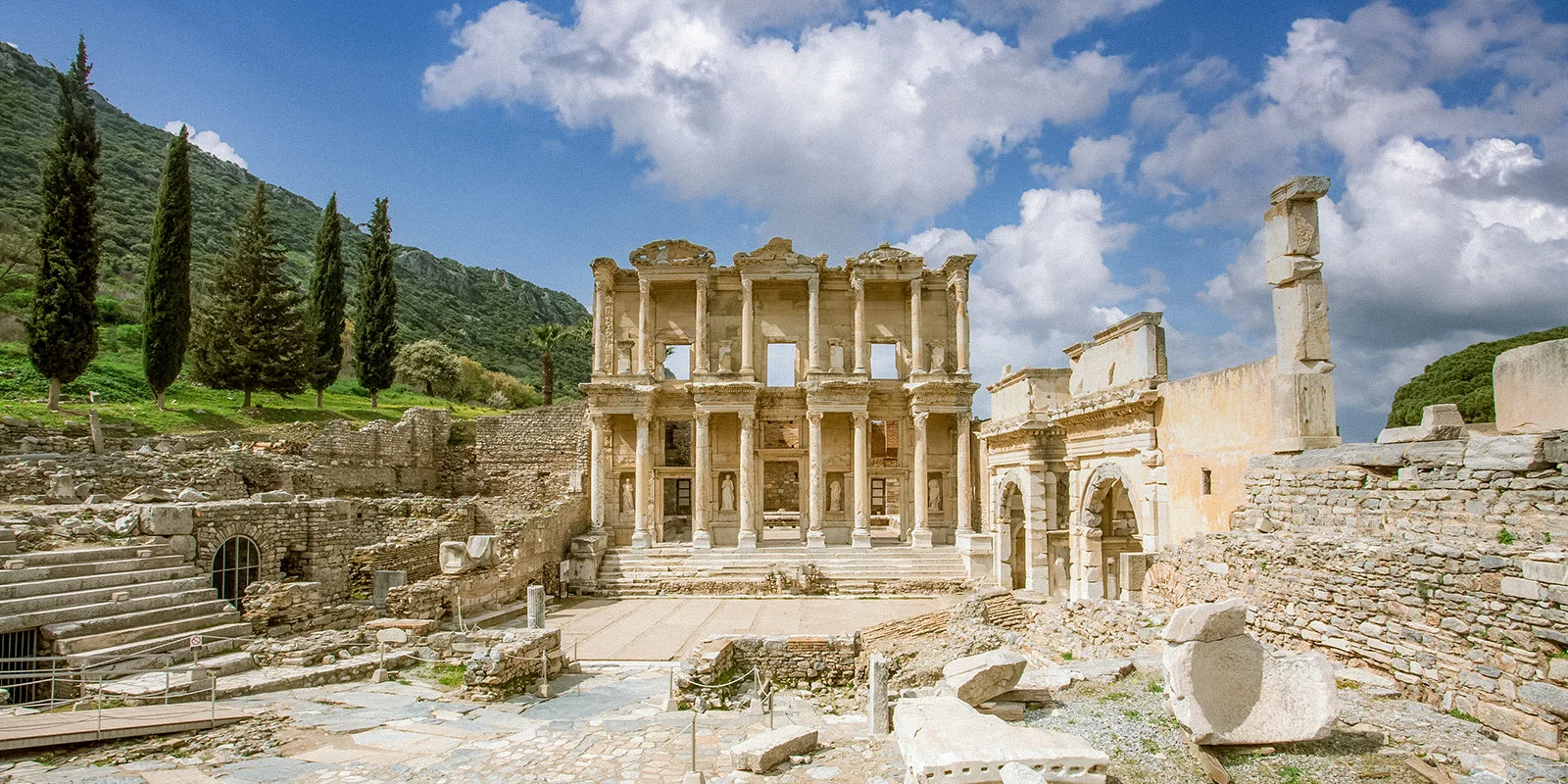
Ephesus was once one of the largest cities of the ancient Mediterranean world, a Roman-era port whose harbour has long since silted up, leaving the ruins stranded a few kilometres inland near the modern town of Selçuk. What survives today is unusually complete: colonnaded streets, public latrines, a working aqueduct system, and the two-storey marble façade of the Library of Celsus. Walking down Curetes Street from the upper gate to the Library and the Great Theatre gives a genuinely rare sense of what a Roman provincial capital actually looked like.
Ephesus also carries deep religious history. Tradition holds that the Virgin Mary spent her final years nearby at the House of the Virgin Mary, and the city is tied to the early Christian community St. Paul addressed in his Letter to the Ephesians. Just outside the main site, the scattered columns of the Temple of Artemis — one of the Seven Wonders of the Ancient World — mark where a temple four times the size of the Parthenon once stood, though little remains above ground today.
This guide covers the essentials for planning your visit: the top things to see, when to come, how to get there, and where to stay if you want more than a rushed half-day at the ruins.
Top things to do in Ephesus
Walk the site from the upper (Magnesia) gate down to the lower entrance, passing the Odeon, the State Agora and Curetes Street before reaching the Library of Celsus, the ruined façade that anchors every photograph of Ephesus. The Terrace Houses, a separate ticketed area of preserved Roman residences with in-situ mosaics and frescoes, give the best sense of everyday domestic life and are worth the extra time. The Great Theatre, cut into the hillside and once seating tens of thousands, sits just beyond. Outside the main gates, visit the House of the Virgin Mary, a modest chapel in the hills above the site, and the scattered remains of the Temple of Artemis on the edge of Selçuk. The Ephesus Museum in Selçuk holds many of the finds removed from the site, including its famous statues of Artemis.
When to visit Ephesus
The site has almost no shade, so spring (April–May) and autumn (September–October) are by far the most comfortable seasons, with mild temperatures for walking the marble streets for two or more hours. Summer (June–August) is very hot with little shelter — visit as early in the morning as possible if you come in this period. Winter is quiet and cool but perfectly workable, with far smaller crowds along Curetes Street.
How to get to Ephesus
The gateway is Izmir Adnan Menderes Airport (ADB), about 70–75 km north, with a private transfer of roughly an hour to Selçuk, the small town beside the ruins. Ephesus is also a common half-day or full-day excursion from Izmir or from the Aegean coast further south, and many cruise itineraries call at the nearby port of Kuşadası, about 20 minutes away by road. There is no train service directly to the site, so a transfer, tour or hire car is the practical way in.
Where to stay near Ephesus
Selçuk, the small town immediately beside the ruins, is the natural base for anyone who wants an early start before the tour groups arrive or a slower, two-day visit that also takes in the museum and the Basilica of St. John. Kuşadası, on the coast about 20 minutes away, suits travellers combining Ephesus with beach time. Izmir works well if Ephesus is one stop on a wider Aegean itinerary rather than the main focus. Options near Selçuk range from simple family-run guesthouses to boutique stays in restored stone houses.
Know before you go
The Library of Celsus and the Great Theatre are the two unmissable landmarks inside the main site.
The Terrace Houses are a separate ticketed area — allow extra time to see the preserved mosaics and frescoes.
Spring and autumn are far more comfortable than summer, since the site has almost no shade.
Izmir Adnan Menderes Airport (ADB) is about an hour’s transfer from Selçuk.
Selçuk, right beside the ruins, is the best base for an early start or a slower two-day visit.
The House of the Virgin Mary and the Temple of Artemis remains sit just outside the main gates.
Tours in Ephesus
Ready-made tours and packages we operate here — book as they are or have us tailor an itinerary to you.
 Full Day
 Half Day5 Nights / 6 Days
Istanbul, Kusadasi, Ephesus & Pamukkale 5 Nights Private Tour - Land Only
Istanbul · Kusadasi · Ephesus · Pamukkale
from €625 per person
View Itinerary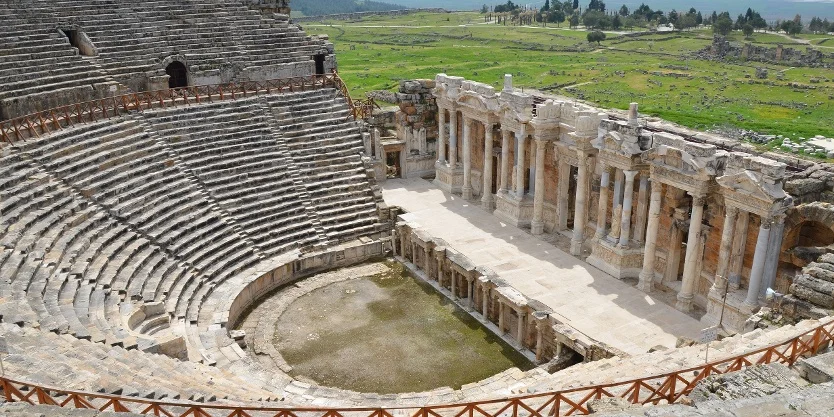 6 Nights / 7 Days
Istanbul, Kusadasi, Ephesus & Pamukkale 6 Nights Private Tour - Land Only
Istanbul · Kusadasi · Ephesus · Pamukkale
from €788 per person
View Itinerary 7 Nights / 8 Days
Istanbul, Cappadocia, Kusadasi, Ephesus & Pamukkale 7 Nights Private Tour - Land Only
Istanbul · Cappadocia · Kusadasi · Ephesus · Pamukkale
from €855 per person
View Itinerary 9 Nights / 10 Days
Istanbul, Cappadocia, Kusadasi, Ephesus & Pamukkale 9 Nights Private Tour - Land Only
Istanbul · Cappadocia · Kusadasi · Ephesus · Pamukkale
from €874 per person
View ItineraryGet a free, no-obligation quote
Tell us your dates and dream itinerary — our travel specialists will review availability and prepare a personal proposal.
Frequently Asked Questions
Is Ephesus worth visiting?
Yes. Ephesus is one of the most complete ancient cities in the Mediterranean, with the marble Library of Celsus, a well-preserved theatre and the excavated Terrace Houses all in one site. It suits history-minded travellers and first-time visitors alike, and pairs naturally with the museum and sights in nearby Selçuk.
What is the best time to visit Ephesus?
April–May and September–October offer the most comfortable temperatures, since the site is largely open ground with little shade. Summer is very hot; if you visit in July or August, go as early in the day as possible. Winter is cool but quiet, with the smallest crowds.
How much time do you need at Ephesus?
Two to three hours covers the main site from the upper gate to the Library of Celsus. Add the Terrace Houses and you should allow three to four hours, and a half-day or more if you also want to see the Ephesus Museum, the House of the Virgin Mary and the Basilica of St. John in Selçuk.
How do you get to Ephesus?
Fly into Izmir Adnan Menderes Airport (ADB), about 70–75 km away, then take a private transfer of roughly an hour to Selçuk. Ephesus is also a standard day trip from Izmir, Kuşadası or the wider Aegean coast, usually by transfer, guided tour or hire car.
Should I stay in Selçuk or Kuşadası for Ephesus?
Selçuk sits right beside the ruins and suits travellers who want an early start or a slower two-day visit that includes the museum and Basilica of St. John. Kuşadası, about 20 minutes away on the coast, suits those combining Ephesus with beach time.
Plan your trip with us
We operate tours and tailor-made packages across this destination. Tell us your dates and what you would like to see, and we will build the trip.