Mardin Travel Guide
Everything you need to plan a trip to Mardin — a honey-stone city built into a hillside above the Mesopotamian plain, layered with Syriac, Kurdish, Arab and Ottoman history and still one of the most distinctive old towns in Turkey.
Mardin sits near Turkey’s border with Syria, its old city climbing a steep hill in tiers of honey-coloured limestone houses that look south across the flat Mesopotamian plain. The centre is largely car-free — narrow stone lanes, vaulted passages and courtyard houses connect a citadel above, mosques and medreses from the Artuklu period, and a still-active Syriac Orthodox community whose churches sit within walking distance of Islamic monuments. A few kilometres outside town, Deyrulzafaran Monastery, founded in the 5th century, was for centuries the seat of the Syriac Orthodox Church and remains an active monastery today.
The wider Mardin region rewards travelling further out. Midyat, about an hour east, has its own old quarter of similar stone architecture and is known for telkari, a fine silver filigree craft practised there for generations, plus a scatter of Syriac monasteries in the surrounding villages. South of Mardin, the ruins of Dara — a Roman and Byzantine fortress city with rock-cut cisterns, tombs and a striking underground gallery once used as a dungeon — are among the least crowded ancient sites in the country.
This guide covers the essentials for planning your trip: the top things to do, the best time of year to come, how to get to Mardin, and where to base yourself.
Top things to do in Mardin
Walk the old town’s main stone street, threading between honey-coloured houses, carved doorways and courtyard mansions, with the Mesopotamian plain unfolding below at almost every turn. Visit the Kasımiye Medresesi, a 15th-century Islamic school built around a courtyard and reflecting pool, and the Ulu Camii, the city’s 12th-century Artuklu-era mosque. Mardin Museum, housed in a former patriarchate building, covers the region’s archaeology and its multi-faith history. A short drive outside the centre, Deyrulzafaran Monastery remains an active Syriac Orthodox monastery and a working link to a community that has been here far longer than the current city walls. With a full day to spare, head east to Midyat for its own old quarter and silver filigree workshops, or south to the ruins of Dara for rock-cut cisterns and tombs with almost none of the crowds of Turkey’s better-known ancient sites.
When to visit Mardin
Mardin has hot, dry summers and cold winters, with the old city’s hillside position giving slightly more relief from the heat than the flat plain below, though July and August still run hot in the afternoons. Spring (April–May) and autumn (September–October) are the most comfortable seasons, with warm days, cool evenings and clear light across the plain that suits both walking and photography. Winter can bring cold winds and occasional snow to the old town, which thins out the crowds but shortens the days for sightseeing.
How to get to Mardin
The gateway is Mardin Airport (MQM), about 20 km from the old city, with a private transfer taking roughly 25–30 minutes. Flights connect mainly via Istanbul rather than direct from abroad. Mardin is often combined with the rest of southeastern Turkey: it is around 3–3.5 hours by road to Şanlıurfa and about 3.5–4 hours to Gaziantep, while Midyat is a manageable hour’s drive east and Dara around 45 minutes to the southeast.
Where to stay in Mardin
Stay in the old city itself, along or just off the main stone street, for the views over the plain and the ability to walk everywhere without a car. The newer, flatter district below the hill is more practical for driving but has none of the atmosphere that draws people to Mardin in the first place. If your itinerary includes Midyat, an overnight there lets you explore its old quarter and nearby monasteries at an unhurried pace before returning to Mardin.
Know before you go
Mardin Airport (MQM) is about 25–30 minutes from the old city by transfer.
The old town’s tiered, honey-stone houses look out over the Mesopotamian plain and are largely car-free.
Deyrulzafaran Monastery, founded in the 5th century, remains an active Syriac Orthodox monastery near the city.
Midyat, about an hour east, has its own historic stone quarter and a tradition of silver filigree craftsmanship.
Dara, a Roman-Byzantine ruin site south of Mardin, has rock-cut cisterns and tombs with very few other visitors.
Spring and autumn give the clearest light and most comfortable temperatures for walking the old town.
Tours in Mardin
Ready-made tours and packages we operate here — book as they are or have us tailor an itinerary to you.
 3 Nights / 4 Days
 4 Nights / 5 Days
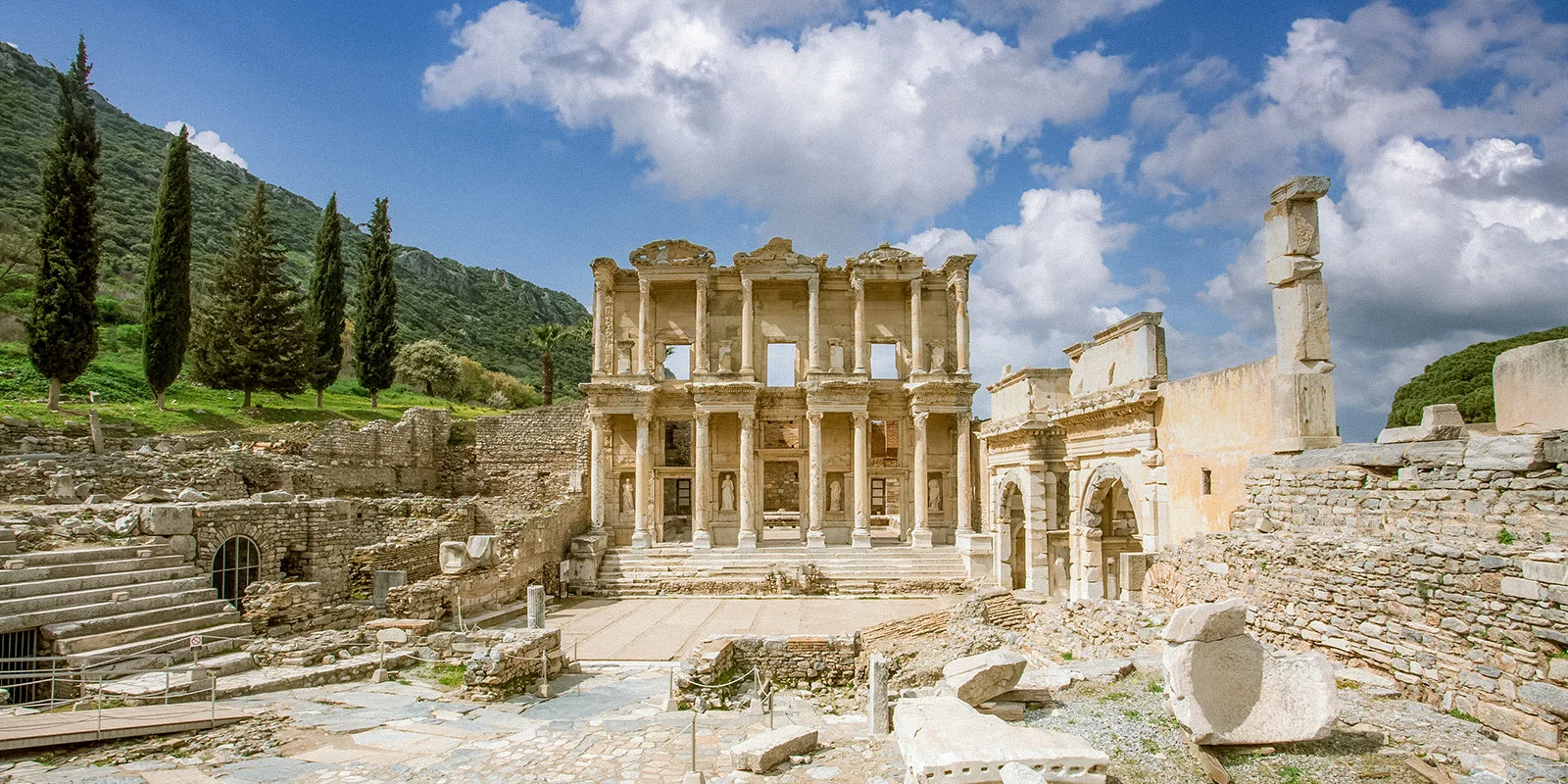 5 Nights / 6 Days
Istanbul, Kusadasi, Ephesus & Pamukkale 5 Nights Private Tour - Land Only
Istanbul · Kusadasi · Ephesus · Pamukkale
from €625 per person
View ItineraryGet a free, no-obligation quote
Tell us your dates and dream itinerary — our travel specialists will review availability and prepare a personal proposal.
Frequently Asked Questions
Is Mardin worth visiting?
Yes, particularly for travellers who want a genuinely different Turkish old town — one built in tiers of honey-coloured stone above a wide plain, with an active multi-faith history rather than a museum-only one. It rewards slow walking more than a checklist of sights.
What is Mardin known for?
Mardin is known for its car-free old city of honey-stone houses overlooking the Mesopotamian plain, its Artuklu-era mosques and medreses, its long-standing Syriac Orthodox community centred on Deyrulzafaran Monastery, and nearby Midyat’s silver filigree craft.
What is the best time to visit Mardin?
April–May and September–October offer the most comfortable weather for walking the old town’s stone streets. Summers are hot, especially in the afternoons, and winters can be cold with occasional snow.
How many days do you need in Mardin?
Two days covers the old town, Deyrulzafaran Monastery and the museum at an easy pace. Add a third day to reach Midyat or the ruins of Dara, both of which work well as half-day or full-day trips.
How do you get to Mardin?
Fly into Mardin Airport (MQM), about 20 km from the old city, then take a transfer of around 25–30 minutes. Most connections run via Istanbul. By road, it is about 3–3.5 hours to Şanlıurfa and roughly 3.5–4 hours to Gaziantep.
Plan your trip with us
We operate tours and tailor-made packages across this destination. Tell us your dates and what you would like to see, and we will build the trip.