Planning your first trip to Turkey? You are in good company — Turkey is one of the world's most visited countries, and for good reason. Few destinations pack so much into one trip: two continents, thirteen thousand years of history, world-class food, turquoise coastlines, otherworldly landscapes, and some of the warmest hospitality you will find anywhere. This is a practical, no-nonsense guide to travelling to Turkey in 2026 — visas, the best time to go, how long to stay, where to go, getting around, money, and safety.
Do You Need a Visa?
Entry rules depend on your nationality. Many nationalities — including the UK, most of the EU, and a number of others — can enter Turkey visa-free for short tourist stays, while others (including US, Canadian, Australian and Indian passport holders) need a quick e-Visa, applied for online in minutes before travel. A handful of nationalities still require a sticker visa. Two universal rules: always check the official Turkish e-Visa website (evisa.gov.tr) for your specific passport before booking, and make sure your passport is valid for at least 150 days (about 6 months) from your date of entry.
Best Time to Visit Turkey
Turkey is a year-round destination, but the sweet spots are the shoulder seasons:
- April–June & September–October (best overall): warm, comfortable weather, ideal for sightseeing in Istanbul and Cappadocia and for the coast, with fewer crowds than midsummer and the lowest hot-air-balloon cancellation rates.
- July–August (peak summer): hot and busy, perfect for beach holidays on the Aegean and Mediterranean coasts but intense for city sightseeing.
- November–March (low season): cool and quiet, with lower prices, atmospheric snowy Cappadocia, and even skiing — though some coastal resorts wind down.
How Long to Stay
For a first visit, 7 to 10 days is the sweet spot: enough for Istanbul plus one or two more regions without rushing. With two weeks you can comfortably combine Istanbul, Cappadocia, the Aegean (Ephesus and Pamukkale), and a few days on the coast. If you only have a long weekend, Istanbul alone is more than worth the trip.
Where to Go: Top Destinations
Istanbul
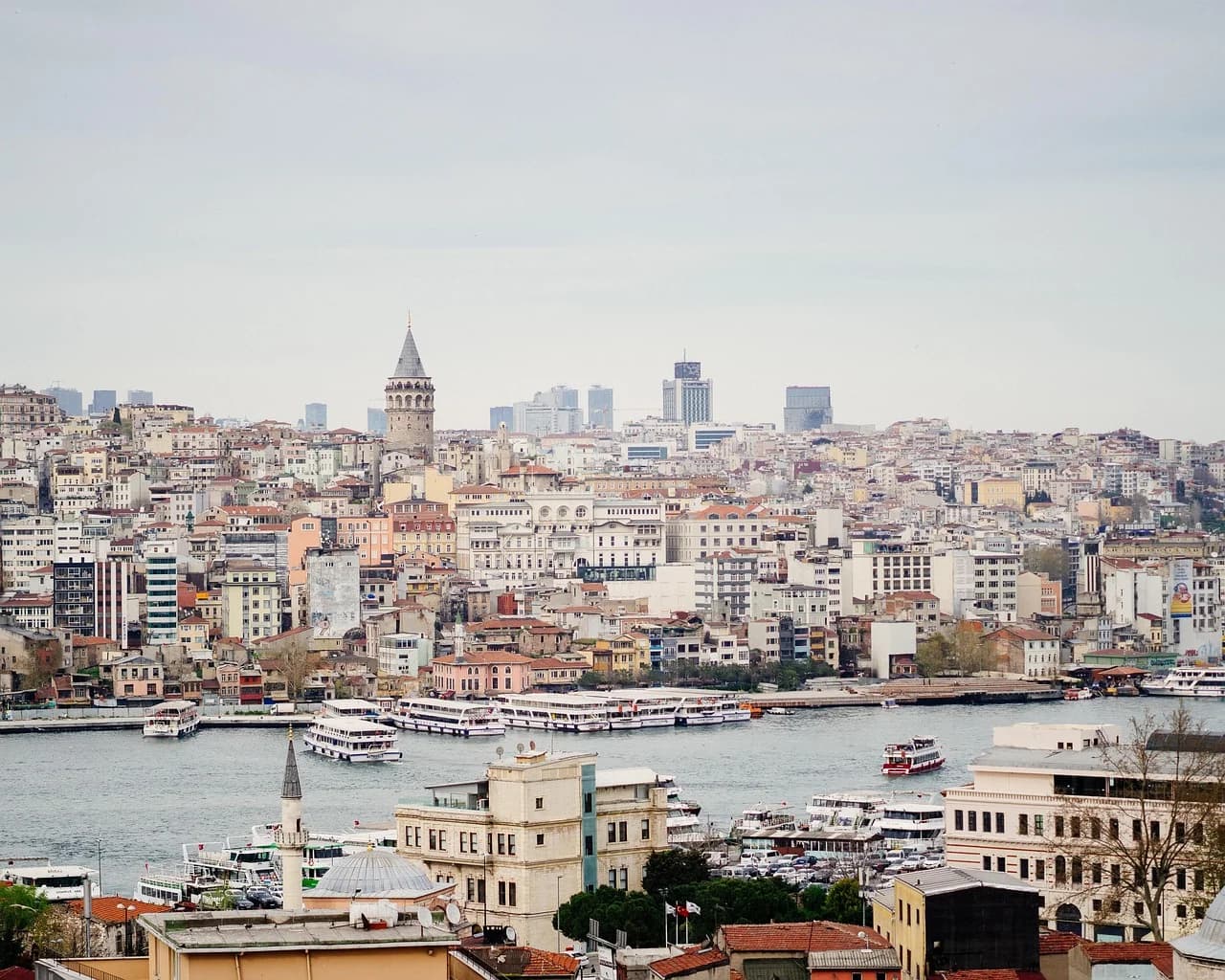
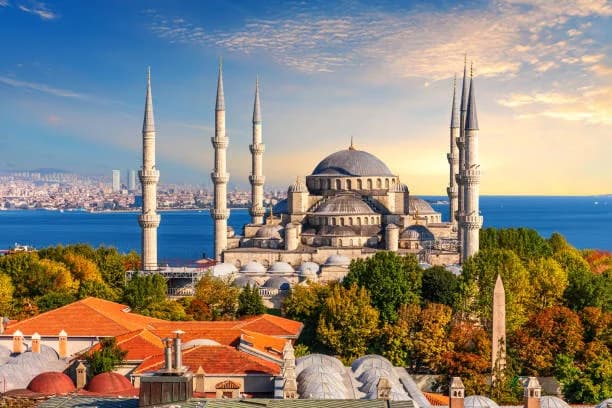
The essential starting point — Hagia Sophia, the Blue Mosque, Topkapı Palace, the Grand Bazaar, and a Bosphorus cruise between Europe and Asia. See our Istanbul guide.
Cappadocia
Fairy chimneys, cave hotels, underground cities, and the famous sunrise hot-air-balloon flights. One of the most photogenic places on earth. See our Cappadocia guide.
Ephesus & Kuşadası
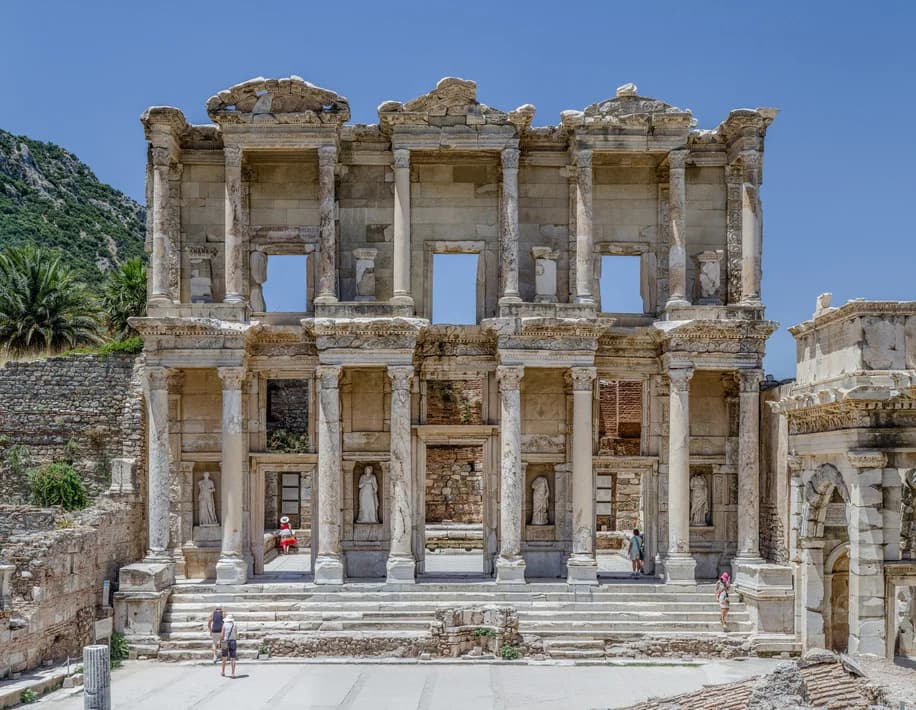
One of the best-preserved ancient cities in the Mediterranean, with the Library of Celsus and the House of the Virgin Mary nearby. Explore our Ephesus guide.
Pamukkale
The surreal white travertine terraces and the ancient spa city of Hierapolis above them.
The Turquoise Coast
Antalya, Fethiye, Kaş and Bodrum — beaches, blue-cruise gulet sailing, paragliding at Ölüdeniz, and Lycian ruins. Browse all of our tour packages for ideas.
Getting Around
Turkey is large, so plan internal travel deliberately. Domestic flights are frequent, fast, and inexpensive — the smart way to cover long distances (e.g. Istanbul to Cappadocia or the coast). For airport arrivals and city-to-city comfort, private transfers take the stress out of navigation, language and luggage; see our airport & private transfers. Within cities, Istanbul has an excellent metro, tram and ferry network on the rechargeable Istanbulkart. Most international visitors find a guided package or private programme the easiest way to combine several regions without logistics headaches.
Money, Costs & Tipping
The currency is the Turkish Lira (TRY). Card payments are widely accepted in cities, hotels, and restaurants, but carry some cash for markets, small cafés, and tips. Many tours, hotels, and premium services are priced in euros or US dollars. Tipping is customary but modest — around 5–10% in restaurants, a few lira for housekeeping, and €5–€10 for tour guides or balloon pilots. Turkey generally offers excellent value compared with Western Europe, especially for dining and guided experiences.
Practical Tips & Safety
- Safety: Turkey is a welcoming country for tourists and the main destinations are well set up for visitors. Use normal big-city common sense in crowded areas and markets.
- Dress: Turkey is relaxed, but cover shoulders and knees when visiting mosques, and women should carry a scarf for their head; shoes come off at the door.
- Connectivity: A local SIM or eSIM is cheap and keeps you online; Wi-Fi is widespread.
- Language: English is widely understood in tourist areas, but a few words of Turkish (merhaba — hello, teşekkürler — thank you) go a long way.
- Water: Stick to bottled water, which is inexpensive and everywhere.
- Plugs: Type C/F, 230V — the same as continental Europe.
Sample Itineraries
Not sure how to string it together? A classic first-timer route is Istanbul (3 nights) → Cappadocia (2 nights) → Kuşadası/Ephesus & Pamukkale (2 nights), which works beautifully in 7–8 nights with internal flights. Add the coast for a fuller two weeks. We have ready-made tour packages for every length and budget, plus single-day daily tours if you prefer to build your own trip — and if you would like something fully tailored, just tell us what you have in mind.
Ready to Plan Your Turkey Trip?
Licensed Turkey tour operator • Packages, daily tours & private transfers.
Explore Turkey Tour Packages →Trusted by travellers worldwide